
Artemis of Ephesus: Why Her Identity Matters

Article 3 of 5
SandraGlahn.com – Making Research Accessible
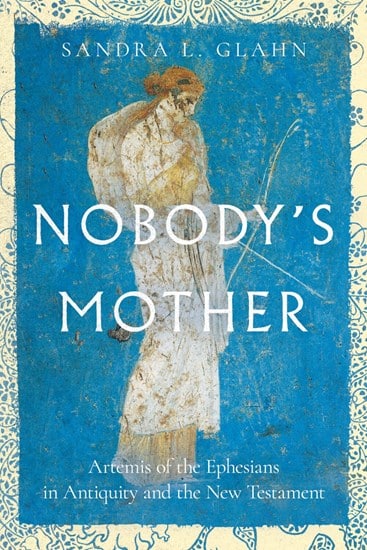
(See Dr Glahn’s new book, Nobody’s Mother: Artemis of the Ephesians in Antiquity and the New Testament)
This article is part of the series Pursuing Partnership: Men and Women in Ministry.
In modern cities when a woman goes into labor, relatives squeal, cheer, and celebrate. But in first-century Ephesus, the response would have been much different. Think cringing, fasting, appeasing gods. Childbirth in the ancient world carried legitimate fears of writhing and death—as is still true in much of the developing world today. It was the number-one killer of women.
The uniquely Ephesian Artemis had a temple in that city that was the crown jewel of the world’s Seven Wonders. According to writers in antiquity, this Artemis was the illegitimate daughter of Leto and Zeus, sister of Apollo, goddess of the hunt, and a confirmed virgin. And she could have different manifestations based on location. In the same way Barbie can be both astronaut and archaeologist while also being the same doll, Artemis could have differing characteristics based on location. In Ephesus, Artemis was the goddess of midwifery.
Many who hear “midwife” and instantly think “fertility, mothering, and nurturing.” Yet such associations are probably unfounded. In the same way midwives and obstetricians deal only with delivery and not sex, fertility, mothering, or nurturing, Artemis was a deliverer only. In fact, in one ancient story someone mocked Artemis the firstborn and her twin Apollo because their mother had only two children and their mother had ten. So the twins shot arrows through all ten of those children—Apollo killing the sons, and Artemis, the daughters. Make no mistake, Artemis was not like the modern-day Wonder Woman who champions females. She could be as ruthless with women as with men. Sometimes even more so.
So how did such a ruthless goddess come to be associated with childbirth?
In Homer’s Hymn to Delian Apollo (ll. 89–101) he describes the birth of Artemis’s twin saying, “Leto their mother was racked nine days and nine nights with pangs beyond wont…” Imagine! Artemis—as the myth goes—along with three other goddesses, watched her mother writhe for a week and a half. From her first day she was linked sympathetically with the birth event.
Strabo (63/64 BC – ca. AD 24) in Geography locates the place of Artemis’s birth as a grove just outside Ephesus. Perhaps this connection with her birthplace and the annual celebration of her birthday caused citizens to link Artemis of the Ephesians with birth. To Ephesians at the time of the earliest Christians, Artemis was to Ephesus as for us Jesus is associated with Bethlehem (with one key different—Jesus actually is Lord.)
Regardless of how the connection came about, we know it was well-established by the third century B.C., because in his biography of Alexander the Great, Plutarch (A.D. 46–120) refers to Artemis Ephesia’s role in childbirth saying, “Alexander was born…the same day that the [first] temple of Artemis at Ephesus was burned.” The temple, he says, “took fire and was burnt while its mistress was absent, assisting at the birth of Alexander.”
So we see the link to delivery–but sans fertility. Artemis was, in fact, immune to love, sex, and marriage. In Hymn to Aphrodite, Homer says Artemis cannot be tamed by Aphrodite. That is, Artemis remains a perpetual virgin. Words such as tomboy, bodily chaste, volatile—these fit Artemis far better than mother, nurturer, and goddess-of-fertility.
Strabo (Geography 14.6) wrote, “Artemis has her name from the fact that she makes people ‘Artemeas’ meaning sound, well, or delivered.” He lists several members of the Greek pantheon including Artemis and adds, “Pestilential diseases and sudden deaths are imputed to these gods.”
It may seem strange for one persona to be linked with both delivery and death. Yet this makes more sense when we consider the sorts of prayers women offered: “Deliver me safely or kill me quickly!”
Another word that shows up when Artemis is mentioned is “save.” The ideas of “deliver” and “save” do go hand in hand. And in Pausanias’s writings we see with relative frequency references to Artemis Ephesia as “savior.” In addition to his writings, we find references to “Artemis Savior”—more than twenty of them—in ancient inscriptions.
So Artemis Ephesia is one who saves or delivers. And she is deemed to have the power to deliver a first-century woman through the most dangerous of passages—childbirth. Though not a man-hater or a radical feminist as we understand the words, Artemis was a virgin, and her priestesses and cult leaders appear to have been virgin girls, sexually inactive wives, and widows. But her followers included men and men sometimes named their children after her. In Paul’s epistle to Titus, he mentions a fellow gospel worker named Artemas (Titus 3:12), which means “follower of Artemis.”
What does all this tell us?
The first epistle to Timothy (1 Timothy) is intended for a recipient who resides in Ephesus (1:3). Knowing what we do about the influence of the Artemis cult in the city, we can see a connection between the abstinence lifestyle associated with Artemis worship and repeated mention in 1 Timothy of young widows, old widows, widows causing difficulty, widows needing to marry and have children, and people forbidding to marry (1 Tim 4:3). This can help explain why Paul, when writing to recipients in over-sexed Corinth, would suggest that widows there should consider celibacy (1 Cor. 7:8), yet when writing to his protégé in under-sexed Ephesus, he wants younger widows to marry and have children (1 Tim. 5:14). It also helps explain why he would emphasize that Adam was first, not Eve (as opposed to Artemis-first, as they believed). Paul is likely correcting a local nativity story with the real creation story. The true narrative corrects the false one.
This article is submitted by Wendy Wilson of Missio Nexus and of Women’s Development Track. Women’s Development Track is a Missio Nexus member. Member organizations can provide content to the Missio Nexus website. See how by clicking here.



Responses