
Exploring the Museums and Highways of Ideas in Africa

“In Africa, when an old man dies,
it’s a library that burns.” Amadou Hampâté Bâ
There is nothing more sacred to us than our thoughts. They are always with us. Our words were born of us. The ideas they represent come from our lived experiences. When those thoughts take the form of a story or a well-developed idea, they become an artifact of the person themselves; their values, culture, history and experiences.
That is why libraries are the museums of the mind. They house the product of our minds in a way that no other institution does. Second to libraries (and bookstores) is the publishing enterprise. It is the investor in the mind. A publisher is looking around at thousands of good ideas with an eye for the great ones. The ones worth investing in so that others may enjoy them. They are idea entrepreneurs who believe in the power of these rare treasures and know how to grow them into products that are accessible to many others.
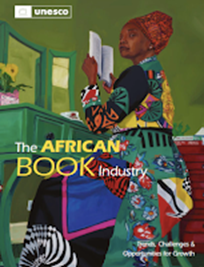
The health of the libraries, bookstores and publishers of a continent matters. That is why reports like UNESCO’s “The African Book Industry: Trends, Challenges & Opportunities for Growth” are so important. It is a comprehensive physical exam given to the patient, Africa, on the status of these vital organs and how they are affecting the whole body. A report like this is rare because of the huge investment of time, money, and attention required to bring it to life. But when groups like UNESCO invest in this check-up, they provide an invaluable look into ecosystem supporting African ideas and stories.
This idea check-up is important for mission agencies to pay attention to. The connection might not seem obvious at first, so let me make my case for why you should give it some attention:
- The idea infrastructure of a country is the highway on which the message of the Gospel can spread. Its health and breadth is an indicator of how Christianity will travel.
- The books, authors and publishers that are getting traction in a certain country have a lot to teach us about where a culture is and what they care about.
- The challenges that publishing is facing are indicative of the challenges the Gospel will face as well. Seeing how publishers are addressing those challenges has much to teach those involved in missionary endeavors.
A Few Observations
- I was so encouraged to hear about the awards for literary work that are popping up all over the continent. On page 17 of the report, they talk about the important role that awards play in encouraging local writers.
- On page 19 it also talked about the role of professional associations in supporting the publishing industry. The report tracked 200 professional associations operating in various African countries. This comment was insightful, “Their presence serves as clear evidence of a sector striving to transition from informal practices to a structured, sustainable and globally competitive framework.”
- One reality I hadn’t understood was the significant number of African countries without domestic ISBN agencies. The report highlights on page 26 that 46% do not have this critical infrastructure that allows for their country’s authors to be part of the global book publishing system.
- I was encouraged to hear that there are 6,400 publishers and they are producing 86,000 titles each year. While that should be much higher, that represents significant activity that should be celebrated and supported.
- The stat that most burdened me was the low percentage of locally written work. On page 33 the report highlights how challenging it is to get good numbers on this. However, of 17 countries they could get data from, almost half said that only 30% of the books they were publishing were from local authors. UNESCO went on to say that this is probably artificially high because the ones who could provide the data had the more developed publishing industries with higher percentages of local authorship.
This quote from the report really stood out to me as a summary of why local publishing is so important:
“Indigenous publishing is integral to national identity and development: cultural, social, and economic. Such publishing reflects a people’s history and experience, belief systems, and their concomitant expressions through language, writing, and art. In turn, a people’s interaction with other cultures is informed by their published work. Publishing preserves, enhances, and develops a society’s culture and its interaction with others.” –Walter Bgoya
Two Ways to Take Action
- As I walked through the report, I began to see the report writers intentionally building a rich curation of African authors. I am sad to say I haven’t read any of them. That is my loss and something I decided to address by building a list in Google Sheets. I hope you will join me in reviewing the curation of over 200 of the authors mentioned in the UNESCO report (along with wikipedia and GoodReads links for many of them). My hope is to read several of these authors in the coming year and I would encourage you to do the same.
- As I read this report, it highlighted the importance of the work of groups like MAI Global; a non-profit that trains Christian publishers around the world and helps them develop sustainable businesses that make an impact in their communities. Partnering with groups like MAI, Oasis International Publishing, and Africa Speaks helps support local African Christian publishers and authors in order to advance our Great Commission efforts.
Don’t miss this opportunity to explore the idea superhighways emerging in Africa and consider how you might participate in the marketplace of ideas in ways that advance the Great Commission.
This article was originally published on Generous Mind by Jon Hirst.




Thanks for this post, Jon! Even though the place of Christian books and literature is different than it was 40 or 50 years ago, it remains critical to evangelism, discipleship, church growth, and cultural transformation. I think this gets overlooked in missional strategies. I love how you call libraries the “museums of the mind” and publishers the “investor in the mind.” Good stuff!