

Why Study History? Reflecting on the Importance of the Past
EMQ » Oct – Dec 2025 » Volume 61 Issue 4
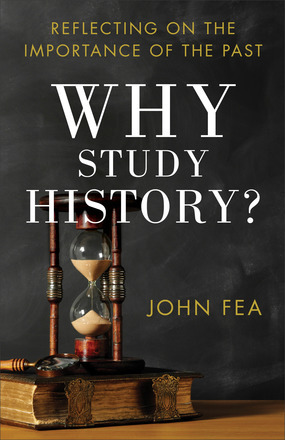
Why Study History? Reflecting on the Importance of the Past
By John Fea
Baker, 2024
171 pages
USD $21.99
*As an Amazon Associate Missio Nexus earns from qualifying purchases.
Reviewed by Cameron D. Armstrong, Asia Graduate School of Theology – Philippines
It is almost cliché to note how few people care about history, at least in the United States. John Fea, history professor at Messiah University, counters that Christians especially can benefit greatly by engaging in historical study. Fea’s argument is convincing.
This second edition of Why Study History? is divided into eight chapters. Chapter one builds a foundation for the historian’s craft, namely “reconstructing the past” in narrative fashion that remains sensitive to the contexts and complexities of their subjects (3). Because of such an interpretive task, chapter two warns against picking and choosing historical events to simply use the past to serve modern agendas. Chapter three asks history students to think of the past as a foreign country with its own social values and rules that are different from our own, thus calling for humility instead of judgment. Chapter four considers how Christian historians should interpret history, maintaining a belief in divine providence yet not overtly attributing outcomes of events like wars and elections to God. Nevertheless, Christians possess essential resources for historical study, which is the subject of chapter five. For example, biblical emphasis on the imago Dei will remind the historian to emphasize the plight of all people, both majorities and minorities. Chapters six and seven take such realities to their logical conclusion that doing history Christianly can lead to empathetic communities that have the power to transform culture. Chapter eight concludes the book by answering, “What can you do with a history major?”, showing that history graduates are making a great impact in multiple fields, including the ministry.
One strength of the book is Fea’s attention to the spiritual benefits of historical study. While Fea gives several examples of bad historiography, he also highlights multiple cases of how history students were transformed spiritually through empathizing with their subjects. For example, Fea writes of a student whose engagement with primary source documents, such as letters and sermons, created a profoundly more sympathetic understanding of Christian Right leader Jerry Falwell.
One possible limitation for readers of Evangelical Missions Quarterly is that Why Study History? does not explicitly address global missions. Only once does Fea reference the possible implications of historical study for global missionary activity, and this reference is found near the end of the Epilogue (163). All of Fea’s examples involve US history, from the colonial era to the present time, a reality for which he should not be faulted since such is Fea’s expertise.
As a long-time missionary overseas who majored in history, this reviewer found Fea’s book refreshingly relevant. The spiritual implications for the proper study of history are myriad. In Fea’s words, “We need to study history not because it can win us political points or help us push our social and cultural agendas forward, but because it has the amazing potential to transform our lives” (137).
For Further Reading
Was America Founded as a Christian Nation? A Historical Introduction by John Fea (Westminster John Knox, 2011).
Historical Thinking and Other Unnatural Acts: Changing the Future of Teaching the Past by Sam Wineburg (Temple University Press, 2001).
EMQ, Volume 61, Issue 4. Copyright © 2025 by Missio Nexus. All rights reserved. Not to be reproduced or copied in any form without written permission from Missio Nexus. Email: [email protected].
Published by Missio Nexus, .