

Zhejiang: Inside the Greatest Christian Revival in History
EMQ » April – June 2024 » Volume 60 Issue 2
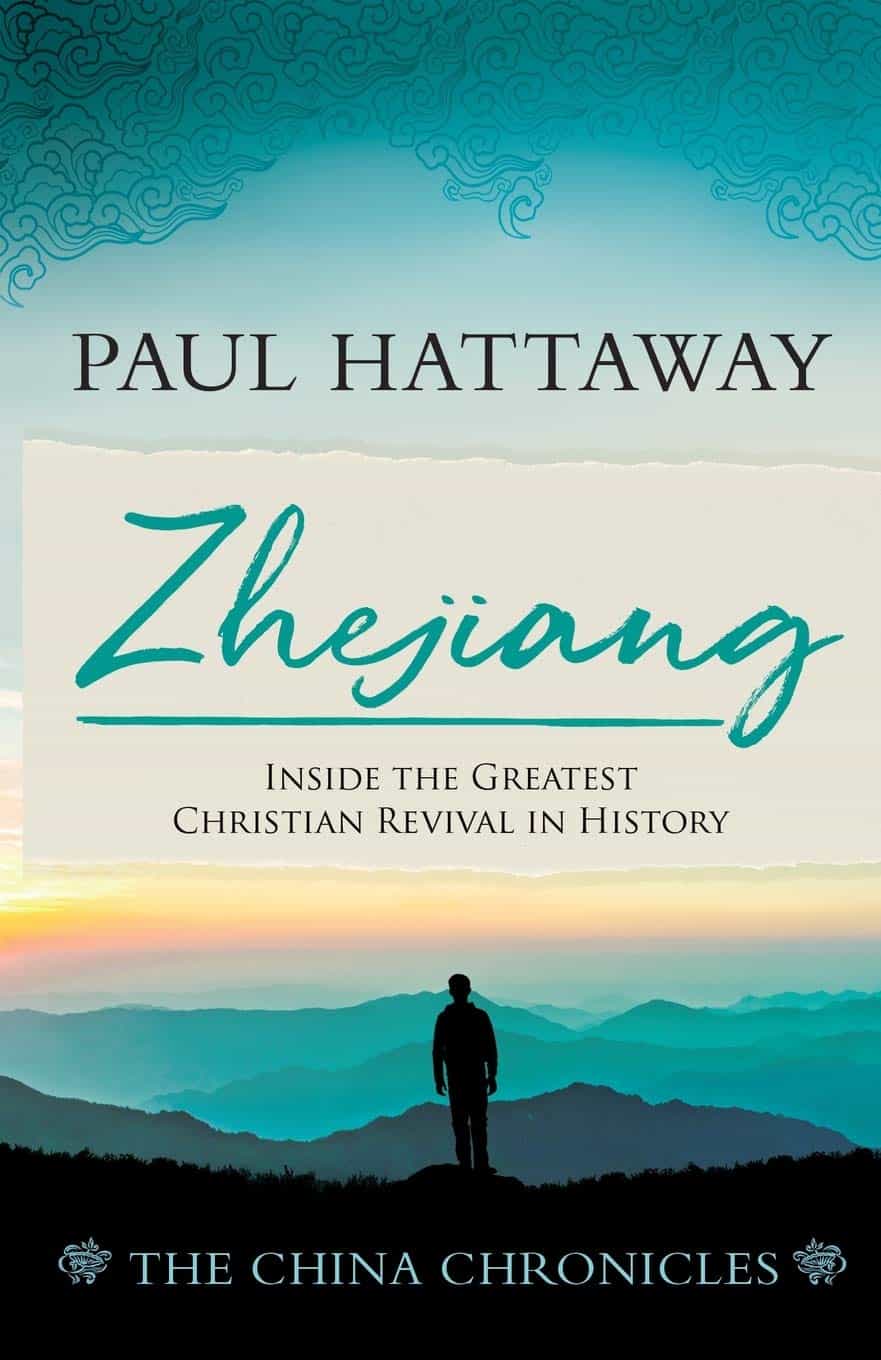
Zhejiang: Inside the Greatest Christian Revival in History
By Paul Hattaway
The China Chronicles
William Carey Publishing
189 pages
US$16.00
*As an Amazon Associate Missio Nexus earns from qualifying purchases.
Reviewed by Regina Manley, DEd in curriculum from Boise State University, 39 years of mission experience and currently working with online fellowships in China.
“Whatever is said about China is true – somewhere in China,” according to a popular saying. Paul Hattaway, an expert on the Chinese Church, documents the tenuous beginnings, the frequent persecutions, and the triumphant work of establishing a Christian witness throughout Zhejiang province.
Zhejiang is called “the Jerusalem of China” due to its many churches and the high percentage of believers – one in five are Christians. This reputation was earned through the believers’ faith which remained steadfast through multiple, brutal waves of persecution. For example, in the mid-1950s, the capital city of Wenzhou was declared a “religion-free experimental zone.” Over four dozen pastors were sent to hard labor camps; only one survived (87). To the Communists’ consternation, Christians continued to multiply. Another example of persecution came in 1997. 400 churches were demolished in November and December of that year.
The introduction summarizes the history of Zhejiang province. It is geographically small but with the tenth highest population (63 million). Located on the southeastern coast, its major cities are known as economic powerhouses throughout China.
Chapter 1 describes the work of the Nestorians arriving in 635 and later Catholic missionaries in the 1600s. Chapters 2 through 17 cover the evangelical thrust. With two exceptions, each chapter covers a decade beginning with the 1840s and finishing with the 2010s. Foreign missionaries (McCartee, Russell, Lowrie, Aitchison, John, Taylor, Stott) are prominent in the first 40 years. Their practices provide insight into planting the gospel in a hostile culture. Chinese leaders are highlighted in every decade (Cidu, Nee, Xiang, Zia, Liu, Wang, Zhizhong).
The book is replete with captivating tales of perseverance under persecution. These show how the Chinese church continued to adapt and remain faithful under all circumstances. Surprisingly, several revivals swept through government Three Self churches, Catholic, and house churches alike. These can inform those interested in how the Holy Spirit has renewed the church in the twenty-first century. The final chapter provides personal letters highlighting current dilemmas Christians face and makes insightful predictions about the future of Christianity in Zhejiang. Maps and population statistics in the appendix are comprehensive.
There could have been greater coverage of Catholic history and perspective. Nevertheless, this is a fascinating read which is hard to put down. It is the third publication in The Chinese Chronicles, an ambitious project describing the advance of the gospel in every province of China.
For Further Reading
After Imperialism: Christian Identity in China and the Global Evangelical Movement edited by Richard Cook and David Pao(Pickwick Publications, 2011).
The Coming Chinese Church: How Rising Faith in China is Spilling Over its Boundaries by Paul Golf with Pastor Lee(Monarch, 2013).
EMQ, Volume 60, Issue 2. Copyright © 2024 by Missio Nexus. All rights reserved. Not to be reproduced or copied in any form without written permission from Missio Nexus. Email: [email protected].
Published by Missio Nexus, .