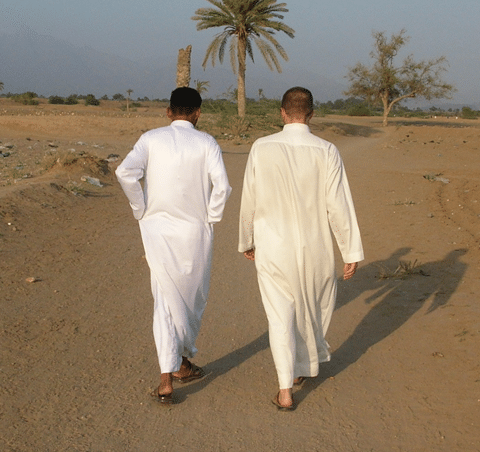
Relationship as the Non-negotiable Foundation for Effective Missionary Preparation

Presented by: Mark Hedinger

Description: We will explore biblical and practical reasons why training for mission work needs to be done in a relational environment. Starting with definitions and intercultural perspectives on interpersonal relationships, we will then consider how the Bible presents life and ministry in terms of vertical (God/human) relationships and horizontal (human/human) relationships. We will hear input from trainers from other nations who speak to how they value relationships alongside content in training. Finally, we will talk about ways that relationship can be woven into internet and residential training events. The primary audience for this workshop is missionary trainers and developers providing pre-field or ongoing learning modules.


Related Articles

The Anatomy of the Christian Mission

If it be true that second century Christians sometimes formed themselves into burial clubs in order to achieve a type of organization legal under Roman law, then that fact could give the Czechs, the Basques, and other oppressed minorities today some good ideas on how to run an underground church in an unconventional form.

The Anatomy of the Christian Mission

If it be true that second century Christians sometimes formed themselves into burial clubs in order to achieve a type of organization legal under Roman law, then that fact could give the Czechs, the Basques, and other oppressed minorities today some good ideas on how to run an underground church in an unconventional form.

The Anatomy of the Christian Mission

If it be true that second century Christians sometimes formed themselves into burial clubs in order to achieve a type of organization legal under Roman law, then that fact could give the Czechs, the Basques, and other oppressed minorities today some good ideas on how to run an underground church in an unconventional form.

The W-Spectrum: Worker Paradigms in Muslim Contexts

While significant progress has been made in evangelical missiology on general contextualization, and much debate has swirled around the degree to which a Muslim-background believer can remain an “insider,” less attention has been placed on workers’ practices—and the connection to their view of Islam. Hence, in this article we seek to augment the overall dialogue by focusing on the worker.

Responses