




EMQ » Oct – Dec 2025 » Volume 61 Issue 4
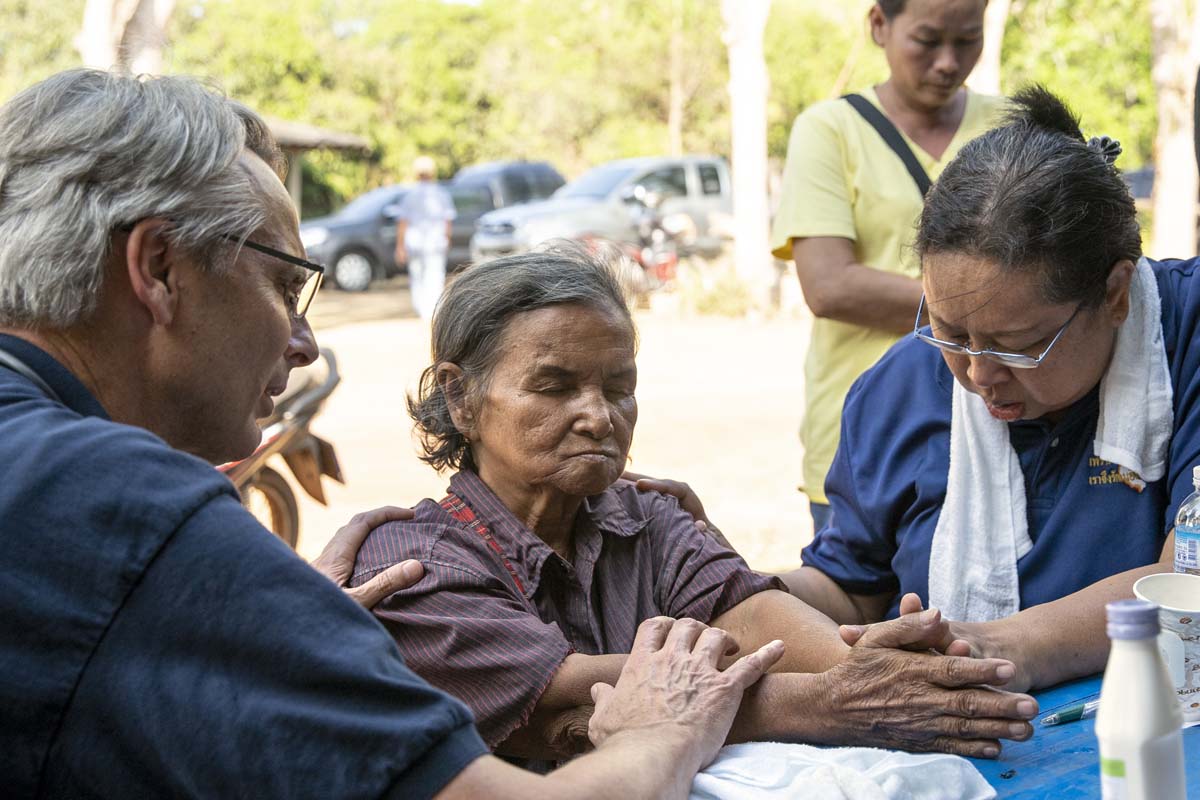
Summary: Mahmud and his family faced a suanggi (shapeshifting sorcerer) terrorizing their community. We conversed deeply about culture and the specifics of suanggi. We studied how to understand spiritual beings from a biblical perspective, and how to overcome fear, examining scriptures to learn how to act biblically. Mahmud and his family discovered new ways to share their faith within their community. The Holy Spirit helped us all grow in our faith.
By Tom Gerick
My wife and I have been discipling a young Sulawesi family of Muslim background who follow Christ. One challenge we faced was to help Mahmud and his family be faithful followers of Christ while a suanggi (a shape-shifting sorcerer) terrorized their community. This suanggi is believed to be a human transforming into a dog who threatens to eat young children and pregnant women. The issues contained within this discipleship task were multiple. Some were intrapersonal. Some related to Mahmud and his family speaking with others. My aim was for God to be glorified in the community. I wanted the evil forces behind these events exposed for what they are. We met many times. This article outlines the process we went through, my reflections on this process, and how Mahmud’s family and I all learned through the experience.
Cultural and Family Background
Mahmud is married to Indri. They have two school aged daughters. Mahmud is illiterate. Indri can read simple text. The older daughter is doing well at school and can now read to her parents. Mahmud has been walking with the Lord for seven years. The rest of the family more slowly changed their beliefs. They have confessed Jesus as Lord and Savior for the last five years. They have studied a selection of stories presenting creation through to Christ and have built quite a strong theological grasp of scripture. We previously walked through issues of demon activity and possession with Mahmud and his family. We also shared Bible stories about Jesus casting out demons (Matthew 8:28–34; Luke 8:26–39) and Satan tempting Jesus (Matthew 4:1–11). One young man from their community was released from demonic control after Mahmud, my wife, and I prayed for him.
Shapeshifting in Indonesia is a common form of sorcery and black magic among many different people groups. People fear it because it causes sickness and death.[i] Many people won’t talk about suanggi because they believe that when you talk about them you are more likely to be attacked.[ii] A man we employed as a gardener said the Balinese people living in our community were feared as they had these special powers to become different animals. They visit the homes of their enemies and cause sickness which leads to death. A Papuan Christian told me that suanggi are evil spirits that come upon people like a curse, causing sickness or accidents that kill the target. She said they can also bring people back to life if a sorcerer waves a special kind of leaf over a body in a detailed ritual. Suanggi are not necessarily connected to humans in any way but can be summoned by people who have special powers. A local friend said that his community used to have many people who could shapeshift into birds, geckos and other animals but they burnt the trinkets and scrolls that enabled them to do this when they accepted Christ many years ago. Christians in Papua believe that suanggi are scared of Jesus’ name and often play Christian songs as a form of protection.
In Mahmud’s community, suanggi are believed to prey on babies and pregnant women at night. We have encountered three separate cases of suanggi threatening community members in the last seven years. They cause great fear in the community. Most families set up systems where one member of each household with young children always keeps watch through every hour of the night. They believe the suanggi won’t risk being seen. Some people place Qur’anic verses over doorways and do the ritual prayers more diligently. Some stop immoral practices in the hope their purity will protect them. People with special powers are sought and consulted to find the identity of the suanggi and why they are attacking. Anger pervades the community. Each night men are ready to try and chase down the suanggi to kill them.
Coming from Australia, I distinctly remember the doubts that came to my mind when I first heard stories about people taking the appearance of animals. It challenged my worldview and I struggled to understand how it was possible to believe shapeshifting was true. It seemed to contradict God’s creation order. According to my worldview, shapeshifting and many other spiritual phenomena are treated with skepticism. Stories associated with these phenomena are treated like fairy tales.
I didn’t find any definitive evidence for human shapeshifting in the Bible. However, Moses and Aaron, and the magicians in Egypt, could turn sticks into snakes (Exodus 7:9–12), Balaam’s donkey could speak when God opened its mouth (Numbers 22:28–30), the serpent spoke to Eve (Genesis 3:1–5) and was likely Satan taking the form of a serpent (Revelation 20:2). Western thinking cannot explain these texts. This led me to be open to the idea of people being able to shapeshift using satanic powers.
As pointed out by Hiebert, Moreau,’ and others, dualism in Western cultures like my own promote fictionizing beliefs about spirits and unseen powers of this world.[iii] Although I grew up hearing biblical teaching about spiritual beings and their influence on this world,[iv] skepticism rises within me each time I face stories of a different spiritual nature. As I disciple others on spiritual phenomena like suanggi, I need to be careful not to allow my worldview or culture to influence the disciples’ understanding and response.
The Discipling Process
Hiebert writes, “All our attempts to understand what God has revealed in Scripture are partial and biased by our historical and cultural perspectives.”[v]Discipling a family through unfamiliar spiritual encounters means being willing to put premature judgments aside. It requires listening with humility and sensitivity.[vi] Therefore, we did not disciple Mahmud and his family with rigid structure and programmed readings. It was fluid in nature. We needed to be ready to adapt and fill gaps in understanding and practice. We focused on listening for what Mahmud’s family needed to follow Christ. We also prayed for wisdom. Moon advises that the Holy Spirit must initiate contextualization.[vii] I believe the Holy Spirit directed our understanding of, and steps through, this discipling experience.
The first things we needed to understand were the issues raised through the threat of the suanggi. I focused on listening to explanations of the situation and tried to ask questions to draw out issues of faith. The Hibberts encourage disciplers to learn disciples’ culture “to be able to express biblical ideals in culturally appropriate forms.”[viii]
The most obvious issue conveyed through our conversations was fear which made it difficult to trust God. Little suggests that fear is the fourth most common obstacle for growth among believers from a Muslim background.[ix] Indri and her daughter were scared of being attacked, or a loved one being attacked. Indri expressed a desire to mengaji (recite or memorize verses) to help her to have faith. We were unsure if she was referring to biblical scriptures or Qur’anic verses in this case but knew that biblical scriptures to recite would be well received and used.
Upon Mahmud’s family revealing the presence of the suanggi and the fear they felt, our first response was to pray intensively for protection for them and their community. We also prayed that Mahmud and his family would be faithful witnesses and that through this, their community, including the sorcerer, would hear the truth of the gospel, repent and believe. Prayer as the first response was an important foundation.[x] Mahmud and his family continue to gather as a family each evening to pray. Ephesians 6:1–21 affirmed prayer as essential. Georges writes, “Prayer, when coupled with genuine faith, replaces magic rituals and sacred channels of supernatural influence.”[xi]
I recognized that my default was to urge Mahmud and his family to trust God for protection. However, how to do that was difficult for an outsider to work out. In part, they needed truth from the Scriptures they could rely on.[xii] They also needed other believers of Christ to stand with them within the situation.[xiii] Being some of very few believers in their community they noted the lack of answers Islam provided their neighbors.At times, they called us almost daily for support, advice, and prayer. I observed through our conversations, prayer, and study of scriptures that Mahmud was further inspired. His faith grew exponentially as he put it into practice. He overcame fear and conversed with the suspected sorcerer and then witnessed to others about his faith which had made him so bold.
The Holy Spirit worked in their hearts to deepen their faith. I mentioned the Holy Spirit would continue to give Mahmud words to speak in different situations (Luke 12:12). We also reflected together on passages like Acts 1:8 and how the Holy Spirit is with us, empowering us in these situations. Mahmud reminded me of Matthew 28:16–20, where Jesus promises to be with us. We therefore discussed how Jesus pronounced that all authority in heaven and on earth had been given to him (Matthew 28:16). On reflection, it would have been good to highlight the Holy Spirit as comforter and helper to Mahmud’s family. Yet, I believe that some sense of this was communicated through these discussions.
Another issue that came up was how to understand suanggi from a biblical perspective. Biblically, how should they act in response to the suanggi within their community? Mahmud’s family had many questions about faith in our first discussions. Questions such as: “What does the Bible say about sorcery and suanggi? Why would someone be so evil and become a suanggi to terrorize and kill people? What does following Christ mean for believers who are in a community terrorized by suanggi?” By the end of the process, their questions became: “Why don’t more people trust in God for protection? How can we show people who God is, so they won’t want to be evil and fall into the hands of evil powers?”
To address Mahmud’s initial questions, we looked at different passages about sorcery in the Bible, most of which condemned any kind of sorcery (Leviticus 19:26, 31; 20:6; Deuteronomy 18:9–14). We did a study on Ephesians 6:10-20. This explained how to prepare for the spiritual war around them. This passage gave them an understanding of the evil forces surrounding what the sorcerer was doing. They understood that it isn’t only human attack through magic but there are other spiritual beings involved. Mahmud recognized the enemy was not the sorcerer. He understood it was the devil with his own desires and goals he wanted to achieve. When I asked what the devil may be trying to achieve, he talked about how it was breaking down relationships, causing suspicion, fear, anger, and a desire for revenge. He also mentioned that others were willing to turn to the same types of evil forces to try to overcome the one that terrorized them.
Reliance on prayer was a focal point from our study of Ephesians 6:10–20. Seeing Jesus’ use of the Word as the sword and a reminder of the truth in the face of temptation (Matthew 4:1–11) helped Mahmud see how to live this out. Mahmud knew the suspected sorceress well. This study enabled him to converse freely with her when he encountered her. Mahmud could see that the devil was the enemy, not the woman he knew so well. Later, I reflected that I could have done a better prior job of highlighting what Jesus had achieved on the cross. I corrected this in later meetings.
In search of verses to memorize to ease Mahmud’s family’s fears, a Papuan colleague suggested Psalm 91. However, after reading Psalm 91 with Mahmud to try to introduce memorization, he commented that these scriptures brought nothing new. He therefore moved the conversation on to more direct questions about suanggi and sorcery. I reluctantly flexed with the situation so not to just stick to my program. But from later conversation, two verses were helpful. He memorized these. They have been a source of strength to the whole family. The first was, “if God is for us, who can be against us” (Romans 8:31). This immediately became a verse that Mahmud loved. So, we read the surrounding passage to give the statement context. Jesus’ love and conquering of death show that nothing can oppose his power and authority. The second verse was, “There is no fear in love, but perfect love drives out fear” (1 John 4:18). In this case, it wasn’t until later reflection that I realized the verse was memorized out of context, so we later studied the chapter in more detail.
The desire to memorize verses from our discussion rather than verses I prepared in advance was probably due to what Moon describes as “emotive experience rather than cognitive understanding.”[xiv] The verses connected with the heart because they naturally emerged in response to the issues we talked about. Memorizing scriptures has never been a strong point in my own life. Although Mahmud and his family learnt verses that helped them, I could still improve this in my discipling of others. In the future, we could make more use of music, drama, or art to present helpful verses in interesting ways that aid memorization and connect well with culture.[xv]
In response to felt needs, we turned to Acts 8:4–25 to see how the apostles confronted situations where sorcery was present. Mahmud noted from the passage there were problems through the entire community. The apostles cast evil spirits out of many people. Simon the sorcerer was just another person who needed to turn to God in repentance. This enabled Mahmud to see the need for community-wide repentance to solve these types of spiritual problems. He wanted to help his community. The Mensahs agree with Mahmud’s community view of spiritual warfare.[xvi]
Mahmud compared the sorcerer using power for evil, with the Holy Spirit’s power. The sorcerer’s power brings fear and destroys community. The Holy Spirit uses his power to help people change in ways that build community. He brings healing, joy, and freedom from evil spirits (Acts 8:7–8). Mahmud was encouraged that even a sorcerer could repent and be forgiven.
Job 1 came up in this discussion to assure Mahmud that even evil spirits must ask permission from God to affect his faithful followers. We also discussed Jesus having all authority through his death and resurrection from 1 Corinthians 15:12–28. Mahmud then commented that Mathew 28:18 also tells us that Jesus’ authority is why we are to proclaim God’s word to others so they can know who he is.
It was through this discussion that I felt the Holy Spirit pointing us to love being a key factor for the community. As some people in Mahmud’s community were contemplating a witch-hunt, Mahmud was discovering that perfect love drives out fear (1 John 4:18). Love continued to be a focus. We studied Matthew 22:35–40 and then 1 John 4. Being finally able to give context to the verse in 1 John they had memorized was helpful. Through this study Mahmud understood that the perfect love that drives out fear was Jesus’ love and sacrifice on the cross (1 John 4:9–10). Through Jesus’ supreme loving act, he defeated all powers of this world. He enables us to love with the same kind of love through the work of the Holy Spirit in our lives (1 John 4:2, 7–21). In contrast, people who don’t know, or who reject God’s love, are susceptible to the devil’s temptation to do evil (1 John 4:1–6, 12). The spirit of falsehood leads them away from the spirit of truth, who leads us to Jesus (1 John 4:1-6). Being able to love and pray for his enemy was evidence of Mahmud’s maturing faith (Matthew 5:43–44).
In a penultimate meeting with Mahmud and his family about this area, we listened to Acts 19. We wanted to ensure that the basis of Mahmud’s family’s protection and authority over evil spirits was their relationship with Jesus. Mahmud recognized that without a relationship with Jesus, the sons of Sceva had no power over the demons (Acts 19:14–16). I tried to relate this to the practice of healers in Mahmud’s community where they speak mantras over water which patients drink to aid in their healing. However, Mahmud defended the practice suggesting that often the healers are praying to God and are earnestly relying on God’s power. He considered the water simply symbolic for receiving healing power from God. We talked about how we can judge these practices by who gets the glory – God or the healer. We turned to 1 John 4 to further Mahmud’s ability to judge between spirits. This is by evaluating whether Jesus is recognized for who he is, or whether truths about Jesus are rejected.
Acts 19:18–19 confirmed for Mahmud that people involved in sorcery can repent and accept God’s forgiveness. They were even willing to burn valuable scrolls used to perform sorcery. This was a particularly helpful confirmation because people in Mahmud’s community believe that sorcerers can never be forgiven. They believe sorcerers belong to Satan and cannot turn back to God. Mahmud was encouraged that there is still hope for the suanggi.
Mahmud remains surprised that people reject God and his word. He is frustrated that more of his community haven’t accepted the message of the gospel. So, to hear that the apostles too faced rejection brought comfort as he could identify with them (Acts 19:23–31). I pointed out that Mahmud and I also do things that are against God. It is only because we have God’s spirit changing our hearts that we can learn how to follow God better.
Mahmud’s family show their growth most through their witness to others. Each family member has been able to show love and speak truth in their discussions with others. They have each testified to different audiences that their faith in God and his protection is the reason they don’t fear the suanggi. Mahmud even spoke to the suspected sorceress herself because of the confidence he has in God and his protection. Ezmadu presents God’s mission to redeem humankind as the grounds for spiritual warfare.[xvii] Mahmud and his family’s witness are proving that spiritual warfare can be used to advance God’s kingdom.
In conclusion, I have learned a lot through walking alongside Mahmud and his family as they have wrestled with this difficult issue. My reflections have often led to my own better ministry practice. The Holy Spirit has been at work through this discipling relationship. Each of Mahmud’s family learned how to rely on God as they overcome fear. They were able to witness to Jesus and help their community through a difficult time. Their understanding of God, other spiritual beings, and spiritual warfare has grown hugely as has their faith, character, and love for God.
[i] ASEAN, “Suanggi, a Dangerous, Scary & Deadly Ghost from Eastern Indonesia,” Indonesiar – Indonesia Negeriku, Orangnya Lucu-Lucu, 27 August 2020, https://indonesiar.com/suanggi-a-dangerous-scary-deadly-ghost-from-eastern-indonesia/.
[ii] ASEAN, “Suanggi, a Dangerous, Scary & Deadly Ghost from Eastern Indonesia,” Indonesiar – Indonesia Negeriku, Orangnya Lucu-Lucu, 27 August 2020, https://indonesiar.com/suanggi-a-dangerous-scary-deadly-ghost-from-eastern-indonesia/; Liputan6.com, “Suanggi, Ilmu Hitam Paling Ditakuti di Tanah Papua,” liputan6.com, 7 January 2019, https://www.liputan6.com/regional/read/3863170/suanggi-ilmu-hitam-paling-ditakuti-di-tanah-papua.
[iii] Paul G. Hiebert, “The Flaw of the Excluded Middle,” Missiology 10, no.1 (1982): 35–47. https://doi.org/10.1177/009182968201000103; W. Jay Moon and A. Moreau, Intercultural Discipleship (Encountering Mission): Learning from Global Approaches to Spiritual Formation (Baker Academic, 2017), 24–26; A. Scott Moreau, Contextualizing the Faith: A Holistic Approach (Baker Academic, 2018), 182–84.
[iv] Moreau, Contextualizing the Faith, 189–92.
[v] Paul Hiebert, Transforming Worldviews: An Anthropological Understanding of How People Change, (Baker Academic, 2011), loc. 5522.
[vi] Hiebert, Transforming Worldviews: An Anthropological Understanding of How People Change, loc. 5522.
[vii] Moon and Moreau, Intercultural Discipleship, 114–15.
[viii] Evelyn Hibbert and Richard Hibbert, Walking Together on the Jesus Road, (William Carey Publishing, 2018), Loc. 454–455. Kindle.
[ix] Don Little, Effective Discipling in Muslim Communities: Scripture, History and Seasoned Practices (IVP Academic, 2015), 173.
[x] Keith E. Swartley, Encountering the World of Islam, (BottomLine Media, 2015), Loc.5896. Kindle
[xi] Jayson Georges, The 3D Gospel: Ministry in Guilt, Shame, and Fear Cultures (Timē Press, 2014), Loc.856.
[xii] Ajith Fernando and Robert E. Coleman, Discipling in a Multicultural World (Crossway, 2019), 99.
[xiii] Fernando and Coleman, Discipling in a Multicultural World, 100; Hibbert and Hibbert, Walking Together on the Jesus Road, Loc. 2163–2217.
[xiv] Moon and Moreau, Intercultural Discipleship, 22–23.
[xv] Moon and Moreau, Intercultural Discipleship, 174–80.
[xvi] J. F. K. Mensah and Georgina Mensah, The Lost Art of Spiritual Warfare (2011), Loc.714.

Tom Gerick, his wife Maria, and their children have been living in the islands of Southeast Asia for 19 years. They love working alongside the local church to disciple people from different cultural backgrounds. They get much rest and enjoyment snorkeling and exploring the beauty of God’s creation along the coastline and in the mountains. Their overarching passion however is seeing communities grow deeply together in relationship with Christ.
EMQ, Volume 61, Issue 4. Copyright © 2025 by Missio Nexus. All rights reserved. Not to be reproduced or copied in any form without written permission from Missio Nexus. Email: EMQ@MissioNexus.org.



Responses