




EMQ » Jan – April 2026 » Volume 62 Issue 1
Summary: As refugees and asylum seekers flee situations of violence and terror, they often are disillusioned by what they have seen and experienced. As a result, they frequently arrive in new contexts with an openness to new ideas including hearing about the Lord Jesus. Yet, there are many challenges. One often neglected challenge is literacy. There is a need to develop new methods and resources for ministry to refugees and asylum seekers that better meet their diverse literacy needs. This article is based on the author’s experience in Jordan but highlights what could be done other contexts.
By S.J. Spyker
I sat at the back of a meeting with others from my church. A small group of majority background refugees were being baptized the next day. Those involved in their discipleship and those being baptized sat together. The room buzzed with excitement. Next to me sat my friend Hope. I’ve watched her come to faith and slowly learn to follow Jesus over nearly 10 years. Many people have invested in her faith journey. As the meeting ended our ministry leader stood up and reminded those being baptized that they needed to read their Bibles every day to keep growing and loving Jesus. Solid advice for those taking such a big step. With my friend Hope in mind, I raised my hand and asked a question in front of the group, “if someone finds reading hard, apart from actually reading the Bible, how else can they grow in their faith?” The leader replied, “You need to learn to read. You need to read the Bible to grow.” My heart sank and Hope’s face fell.
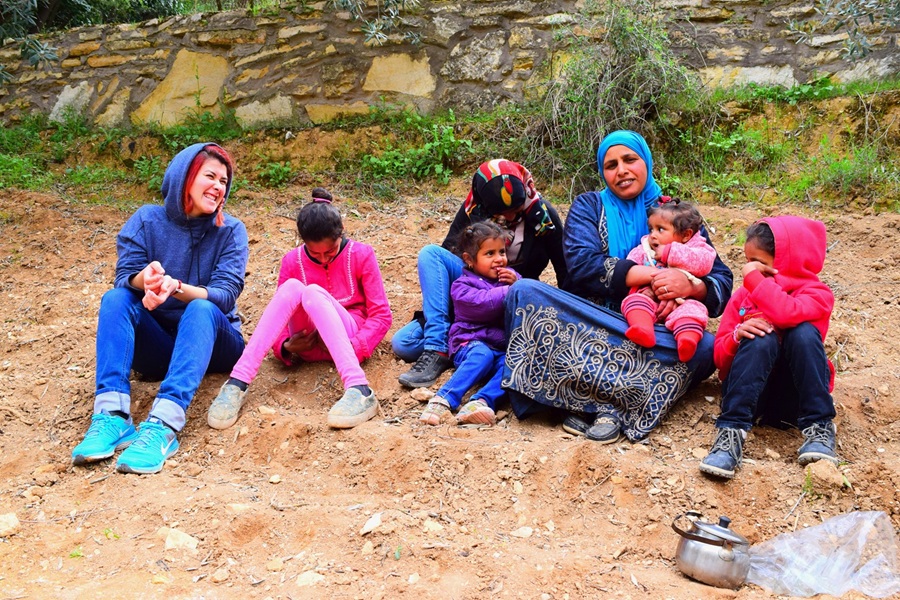
My friend Hope is typical of the women I work with. She grew up in Somalia and Yemen but fled to Jordan over 10 years ago. She completed perhaps just one or two years of formal education in her home country and cannot read even the most basic documents in any language. Her mother tongue is not Arabic, but she has learned enough of it to be able to function in daily life. Our conversations and her discipleship happen in Arabic because that is our shared language. In her life, Hope has experienced a significant amount of trauma. She fled not one, but two war torn countries, and as a child, experienced significant domestic violence. She now works long hours as a cleaner and cares for her 6 children alone because her husband is mostly absent. Her life is dominated by financial pressures; how to pay rent, how to afford necessary medical treatments and how to feed her family. Hope waits, like most, to one day, hopefully, be resettled as a refugee in the West. Despite the challenges of her situation, through the patient sharing by local and foreign gospel workers, Hope has come to a real faith in the Lord Jesus. Yet, learning to read is an unrealistic prospect for her.
Refugees in Jordan
In Jordan, the number of official refugees is over 500,000.[i] However, the actual number is much higher. A government decision in 2019 suspended the acceptance of new asylum seeker applications by the UNHCR. This policy has not stopped people entering the country to seek refuge. It simply means those who enter are not granted official status as refugees or asylum seekers.[ii] The largest population of refugees in our context come from Syria though many also come from Yemen, Iraq, Somali, and Sudan. These Muslim majority countries are difficult places to engage in gospel work. Yet, as they flee to the relative stability of Jordan, there are significant opportunities for them to hear the gospel for the first time. Many churches, organizations and individuals are actively seeking to share the life message of Jesus Christ with them.
Alongside these opportunities, refugees and asylum seekers who flee to Middle Eastern countries like Jordan face significant challenges if they do encounter the gospel. As with other Muslim groups, the gospel is likely to radically confront their cultural values and worldview. They have likely grown up hearing many untrue things about Christians and what the Bible teaches. In addition to all these challenges, asylum seekers and refugees are also likely to struggle because of literacy.
Literacy rates differ significantly between Jordanian nationals and the refugees and asylum seekers who reside in their country. Literacy rates for Jordanians are relatively high. There are 95% of the general population who are assumed to be literate.[iii] Syrian literacy rates are also high. Syrians who have left their homeland since the uprising in 2011, especially young people, are more likely to struggle with literacy than their Jordanian counterparts. This is due to the impact of forcibly leaving their homeland, years spent in poorly resourced refugee camps, and disruption to their education means.[iv] The available statistics for Yemen, Sudan and Somalia suggest literacy rates of those coming from these countries are significantly lower.[v]
However, exclusion from formal education and disrupted education due to forced migration is not the whole picture. Several other unique factors must be understood.
The Host Country’s Language Is Often Not Their Mother Tongue.
Arabic is often not the mother tongue of refugees and asylum seekers in Jordan. The largest number of refugees in Jordan come from Syria and share a dialect similar to Jordanians. However, those who come from Yemen, Sudan, Iraq and Somalia may speak a very different dialect of Arabic or their primary language may be Fur, Zaghawa, or Somali.
In addition, most refugees who leave their homeland are thrust into survival mode. They try to provide for their families with whatever work they are able to find. They typically do not have the space or time to engage in formal study of the local Arabic dialect. Slowly, through interactions on the street, they pick up enough local Arabic to communicate and function. Most hope Jordan is a temporary stopover before being relocated to the West. As such, their motivation and capacity for learning the local Arabic dialect is often limited.
In practice this means, for example, refugees who have grown up in Darfur and spent many years in a refugee camp in Chad, might arrive in Jordan speaking Zaghawa and Sudanese Arabic. However, they may not be able to read or write Arabic. Over time, as they work as cleaners, they may gain enough spoken Jordanian Arabic to function and communicate but it is unlikely that they will have learned enough formal Arabic to read a text as complex as the Bible.
Reading Written Words Is Different than Spoken Language
Learning to read the Bible in Arabic requires more than just learning to read words on a page that have known meanings. When school children in my home country learn to read, they are learning to decode written symbols representing English words that they already understand in spoken English. The situation for learning to read Arabic is significantly different.
Arabic functions in two levels, formal and colloquial. These are very distinct. So, learning to speak Arabic with a shop keeper on the street requires a different set of vocabulary from the vocabulary used to read something written in Arabic.
Additionally, for a Muslim background person, reading the Bible involves learning a set of cultural Christian vocabulary that is entirely unfamiliar to them. The 1865 Smith- Van Dyck- Bustani is the most common Bible translation used in Arabic churches in Jordan. It contains large amounts of traditional ecclesiastical vocabulary- language that is not used in daily life or understandable to people who have not been brought up in the church. Words like ‘sin’, ‘hell’, and ‘prayer’ have distinct terms used and understood by Muslims that are different to those used and understood by Christians.
As a result, learning to read the Bible as a Muslim background believer, especially as a refugee or asylum seeker is a formidable task. It requires acquiring a large catalogue of new words, not simply learning to decode symbols they already are familiar with.
Trauma Impacts Information Processing
It has been well documented that trauma impacts the ability to process, memorize and retain information.[vi] Most refugees I visit recount fleeing violent situations in their home country. They have experienced the loss of close family members, presently fear being deported by local authorities, experience racism and discrimination, feel anxiety over the future, and frequently face food insecurity. The impact of this trauma makes the process of learning to read even harder. Their life experiences seem to be a roadblock to memorizing and processing new information, both of which are important skills in the learning to read process. As a result, learning to read can be very challenging.
Why This Issue Needs to Be Addressed
Sadly, Hope’s story is not isolated. When it comes to ministry, our natural tendency is to replicate what we have seen and experienced. If we have only seen very literate ways of doing evangelism and discipleship and, if we are not aware of the issues, we are unlikely to deviate from the patterns we know and are comfortable with.
For example, I was discipled at university through a program that involved reading lengthy Biblical texts, summarizing the information in an academic way, answering comprehension questions and making abstract applications. The process of discipleship was treated with the same academic rigor as any other subject at university. For me it is easy to replicate that. And yet, discipling in the way I was discipled is unlikely to be fruitful in my Middle Eastern context amongst refugees and asylum seekers with diverse literacy abilities. Something different is necessary for them to grow in in their knowledge of and love for the Lord Jesus.
As the story of Hope demonstrates, the literacy challenges refugees and asylum seekers face need to be better understood. Those ministering to refugees and asylum seekers must find ways to bridge the literacy gap. Evangelistic and discipleship resources need to be adapted and new ones produced which incorporate alternative methods of communication such as oral methods. The discipler must meet the refugees they serve at their current literacy levels rather than expecting them to upskill before they can enter a dynamic and vital relationship with the Lord Jesus.
The Current Situation
Bible storytelling is increasingly popular in ministry to Muslims globally. Storytelling is a form of communication that connects with both literate and non-literate audiences well. It replicates communication patterns familiar to both literate and nonliterate cultures in many contexts. Encouragingly, it is also widely used in our context, especially in evangelism.
The ministry I serve in has a well- organized home visiting program. Volunteers deliver much needed relief to refugee families and present the Biblical Creation to Christ account in story form to Muslim families. It introduces these families to significant themes in the Bible such as sacrifice, God’s love and his unfolding redemptive plan throughout history culminating in Christ. I understand from conversations with other workers that similar programs are used with refugees and asylum seekers across the Middle East. And, in the context of relationships and practical care, many are seeing that storytelling really is an effective tool for introducing Muslims, including refugees and asylum seekers, to the Lord Jesus.
The challenge however is the next step. What do you do once someone has listened to key stories from the Bible? How do you engage those who struggle to read with parts of the Bible that are not narratives? How do you help someone develop a personal relationship with God without relying on another person teaching them? How do impart doctrine or provide wisdom and encouragement for Christian living?
What is currently available for discipling Muslim background believers and seekers typically requires the reading of lengthy texts, watching long videos or engaging with more academic style material. And while portions of these might be able to be read aloud for those who can’t read it for themselves, this fails to account for the different information processing systems that oral preference learners display. It also fails to appreciate the impact of trauma on memory or the difference in concentration spans of those have not participated in formal education. Little thought is given to how to incorporate pictures, songs, symbols, and films into discipleship to make God’s word more accessible for such audience. And the need to differentiate the pace, frequency of repetition, and amount of information presented is often not considered.
Sadly, in many cases, those who struggle with literacy are simply put in the too hard basket. Gospel workers instead invest in discipling others who are more easily able to access written text. In doing so, refugees and asylum seekers are short changed. As they flee hopeless situations in search of a better life, they wait in limbo to be resettled. In this liminal space, many are disillusioned by Islam and spiritually open in a way they were not in their home country. There is great opportunity for the progress of the gospel amongst these people if only we can cross the literacy gap.
Christian workers who fail to find ways of providing refugees and asylum seekers more accessible ways to understand and grow in the gospel miss the opportunity of emulating the example of the Lord Jesus. He served the weak and vulnerable. He never set reading the gospel as a barrier to being his disciple. Instead, from the beginning he invited fishermen, farmers, and women into a life of deep fellowship with him.[vii] These- ordinary men and women often were not educated yet he commissioned them as active partners in taking the gospel to the ends of the earth.
Diverse literacy needs do pose a formidable challenge to ministry amongst refugees and asylum seekers. Yet, the challenge is not insurmountable. Recently a group of newly believing women in my context gathered to begin studying the book of Philippians. The book addresses issues very relevant to their situations. These include persecution for following Christ, joy in hardships, and perseverance in suffering. The text was initially overwhelming. But as we considered the story behind the letter, broke it down into very small chunks and individual verses, repeated concepts, simplified translations, drew pictures, and completed practical activities, the women were encouraged by a message that spoke powerfully into their lives.
The Application Beyond Jordan
While this paper has addressed an issue particularly relevant to Jordan, it speaks to one that applies to many other contexts. There are great gospel opportunities amongst refugees and asylum seekers. Yet ministry to diaspora peoples is profoundly impacted by their literacy needs. Our presentation of the gospel and the way we disciple refugees and asylum seekers may need to look radically different from ministry with others in the same context. This is true of those working with refugees across the Middle East, but also in Western countries where refugees resettle. Time must be invested in developing resources that meet their diverse literacy needs because discipleship resources used with other segments of society, even those from similar cultural backgrounds, may prove an unnecessary barrier to maturity in the Lord Jesus.
[i] “Jordan, Operational Data Portal”, UNHCR, The UN Refugee Agency, https://data.unhcr.org/en/country/jor
[ii] “HELP JORDAN”, UNHCR, The UN Refugee Agency, https://help.unhcr.org/jordan/en/helpful-services-unhcr/registration-unhcr/
[iii] JT, “Illiteracy rate falls to 5%; youth literacy nearly eradicated — DoS” The Jordan Times, September 7, 2024, https://jordantimes.com/news/local/illiteracy-rate-falls-5-youth-literacy-nearly-eradicated-%E2%80%94-dos
[iv] Kristin Hadfield, Mays Al-Hamad, Rinad Bakhti, Rana Dajani, Amal El Kharouf, Julia Michalek, Joana Mukunzi, Lina Qtaishat, Tanvi Sethi, Sophie von Stumm, and Isabelle Mareschal, “Predictors of Literacy and Attitudes Toward Reading Among Syrian Refugee Children in Jordan,” International Journal of Early Childhood, Volume 56 (2024), 19–39, https://doi.org/10.1007/s13158-022-00334-x
[v] Reem Abbas, “Conflict and poverty keeps children out of school, it is time to fight back”, UNICEF, April 10, 2022, https://www.unicef.org/sudan/stories/conflict-and-poverty-keeps-children-out-school-it-time-fight-back#:~:text=10%20April%202022,Guidance%20in%20East%20Darfur%20state. Najwa Al Romaim, “Breaking the Cycle: UNICEF’s Basic Literacy and Numeracy Programme Transforms Lives in Yemen” UNICEF, October 21, 2023,
https://www.unicef.org/yemen/stories/breaking-cycle-unicefs-basic-literacy-and-numeracy-programme-transforms-lives-yemen#:~:text=21%20October%202023,without%20sustainable%20access%20to%20education. UNESCO Institute for Statistics (UIS), “Literacy rate, adult female (% of females ages 15 and above) – Somalia,” World Bank Group, September 22, 2025,
https://data.worldbank.org/indicator/SE.ADT.LITR.FE.ZS?locations=SO
[vi]Kate Griffiths, Kate Stevens, and Jenny Treleaven, “Trauma-informed practice in schools: An explainer”, (Centre for Education Statistics and Evaluation, NSW Department of Education, 2020) https://education.nsw.gov.au/content/dam/main-education/about-us/educational-data/cese/2020-trauma-informed-practice-in-schools.pdf
[vii] Harry Box, Don’t Throw the Book At Them (William Carey Publishing, 2014), chap 3.

S.J. Spyker has lived and served in the Middle East for nine years. She has a background in Education and a Master of Divinity from Sydney Mission and Bible College. Spyker works primarily with refugees and marginalized women.
EMQ, Volume 62, Issue 1. Copyright © 2026 by Missio Nexus. All rights reserved. Not to be reproduced or copied in any form without written permission from Missio Nexus. Email: EMQ@MissioNexus.org.

Responses