




EMQ » Jul – Sept 2025 » Volume 61 Issue 3
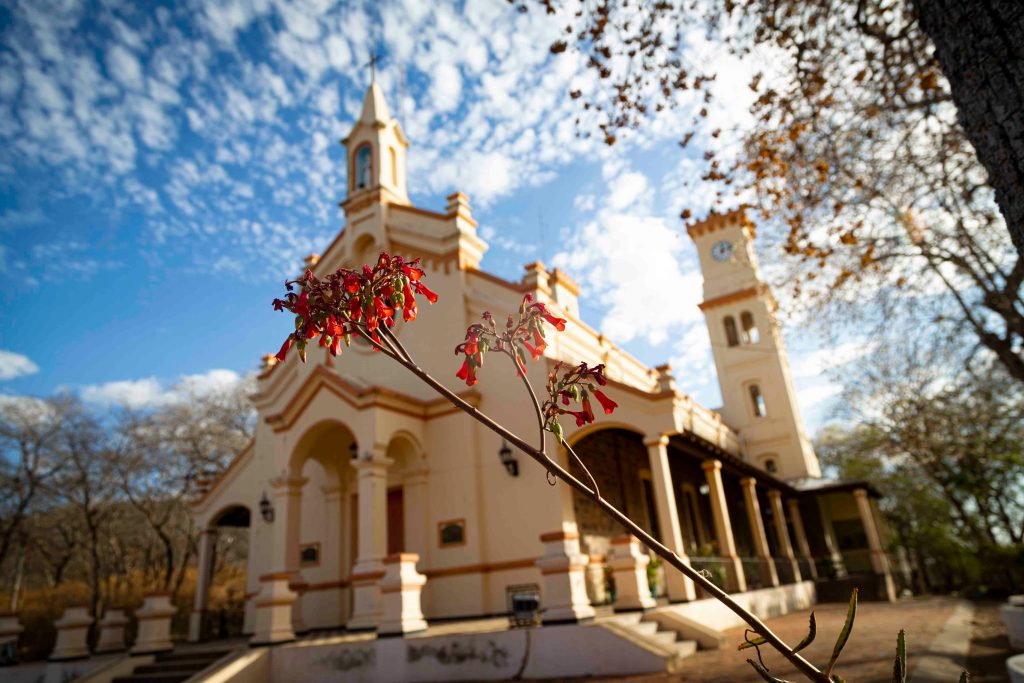
Summary: Frank Paul discusses the transformation of Mennonite missionary practices from imposition to a more respectful, non-paternalistic approach. It highlights the importance of listening, empowering indigenous people, and fostering mutual respect. The shift towards intercultural dialogue and fraternal accompaniment has led to a more respectful and effective missionary presence in the Argentine Chaco.
By Frank Paul
The classic Christian missionary movement began and was largely carried out during the era of colonialism. The Western worldview assumed superiority to the rest of the world because empire could be imposed through the use of force. Along with this mentality, those who went to foreign lands to convert the heathen assumed that the truth of Christianity was clear. They also thought it was just a matter of time until Christendom would take hold of the entire globe and then the end of time would have arrived.
In contrast to that, the Mennonites have tried to dissociate the Christian mission enterprise from empire and its style of imposing the stronger over the weaker. In order to be more closely aligned with Jesus’ own way of being in the world, they suggest:
To accompany others in mission is to listen, discern and share with our companions what the good news of Jesus means in their context and find ways to empower them for their response to God’s call.[1]
However, an accompaniment form of mission has not always been the way mission was understood and practiced by Mennonite Missions. This article portrays some of the hard lessons that needed to be learned, and the transformation that took place in the second half of the twentieth century, particularly in Argentina.
As a family, we were witnesses of this new kind of relationship between missionaries and indigenous people that consciously took into account the prevailing legacy of colonialism and violent Christianization. Our time in the Chaco transformed my understanding of mission and theology itself.[2] I increasingly felt the need to listen, to be present as a guest, to be careful not to take upon myself the responsibility to do that which rightly belonged to another.
Post-Conquest Culture
For quite some time now, the Western World has been referred to as post-Christian. In Native American circles however, we talk more about a post-conquest culture. Christendom is still very much present in Latin America. But the conquest of Indigenous America – endured for more than 500 years – is the historical and everyday reality which continues to dominate the lives of the indigenous survivors.
The Chaco still lives and breathes the conquest of its original peoples. This included cultural and spiritual violence – what we nowadays call genocide, epistemicide, and deicide. These atrocities were carried out in the name of the conquerors’ Christian God, and under his authority. Consequently, to identify as Christian for many in the Chaco, and throughout much of Latin America, still primarily means being non-indigenous and associated with those who came to conquer. In addition, during the conquest of the Chaco by the Spanish, the term to evangelize was commonly used for the action of violently subduing the indigenous population, and subsequently forcing them to accept Christian baptism.
A Brief History of the Mennonite Mission Among the Toba/Qom People
Looking at the history of the Mennonite Mission among the Chaco helps us better understand the Mennonite team’s current alternative practice.
In 1943, when Mennonite missionaries from Canada and the United States established a mission to the Toba people in the Argentine Chaco. They did so in the style of the already ongoing evangelical missions to Indigenous groups at the time. They sought to serve the uncivilized Toba (as they perceived them) in the best and most holistic way possible. Evangelizing them went hand in hand with a civilizing mission. Hence, during their early presence among the Toba, the Mennonite Mission established a mission compound completely equipped to carry out worship and Bible teaching, health and basic education services, training in farming and carpentry, sewing and homemaking skills, as well as managing a store in order to provide basic living supplies at fair prices for Tobas living on the mission farm and in the surrounding area.
This was a comprehensive mission program. However, it was carried out without valuing traditional Toba culture. The indigenous way of life and native spirituality were considered only as negative influences to be overcome. The missionary vision did not include the possibility that God’s wisdom was already present in the Toba culture. The missionaries’ language of communication with the Toba was Spanish. It was thought that Spanish was the language of future integration of the surviving indigenous population into the dominant Spanish-speaking society. Missionaries also did not drink mate tea with their new Toba neighbors. The custom of sharing a common metal straw was felt to present too great a risk of getting infected by contagious diseases like tuberculosis.
The mission strategy was that Toba families were invited to live on the mission farm and taught how to live in the new setting. It was expected that they would convert to a Mennonite way of understanding the gospel of Jesus. They would then return to their respective areas as emissaries of both the new way of life as well as the gospel.
Within a relatively short time, however, missionaries became the patrón (used in the Chaco for the boss, foreman, or owner) of the Toba adherents of the Mission. Those in charge of the mission program inadvertently participated in the same goals as the government and other immigrant populations. This was to erase Indian culture and transform the Indians into participants of the dominant Christian culture. Thus, the Toba Mennonite mission program understood its demands to be simply another version of the larger social changes required by the surrounding Christian culture which dominated the surviving Toba. At the same time, however, they must have realized that the mission personnel were indeed acting with good intentions and talked also about the love of God. But pressure to leave their indigenous ways was ever present.
It is important to realize, though, that most missionaries at that time were sent out with no specific training for understanding foreign cultures. Mission agencies thought they were proceeding in an acceptable way since they included the message of salvation through Jesus as part of their civilizing program. Today, this approach looks like the destruction of culture, no matter by what name, or with what intention, it may have been carried out.
By the early 1950s, ten years after the founding of the mission, Mennonite missionaries were so busy overseeing the entire program, they had little time left for teaching the Bible. Neither were the Toba people understanding the gospel message because they did not hear it in their own language. Something had to change!
A Bold New Approach in Missionary Practice
In 1954, The American Bible Society, upon request from the Mennonite workers, sent William and Marie Reyburn, experts in culture, language, and Bible translation to the Chaco. Their task was to help missionaries in the Chaco understand the intercultural dynamics of their context. According to oral history, on one occasion, when the conversation was about whether to drink mate tea with the Toba, Bill Reyburn asked the missionaries, “After all, who should missionaries really come to save, the Toba or themselves?” In addition, the Reyburns learnt the Toba language.
As a result, Albert and Lois Buckwalter – directors of the Toba Mennonite Mission at the time – underwent a profound conversion in their way of understanding their calling in the Chaco. They became the main protagonists of an innovative approach to intercultural mission. This was a non-paternalistic presence which did not form denominational churches or impose imported theology. This was mission without conquest, an experiment in being a nonviolent missionary presence.
Albert and Lois clearly understood this change as coming from the Lord. They wrote to their mission headquarters, “The Holy Spirit took the church away from us!” By the grace of God, J.D. Graber, mission administrator overseeing the work in the Argentine Chaco at the time, was willing to accept the change, even though it seemed like unchartered waters for the Mennonite Church.
Thus, in the mid-1950s, a bold new pattern of missionary praxis was born in the Argentine Chaco. The indigenous survivors of the conquest of the Chaco were thereby free to experience the gospel as invitation rather than imposition.
Disturbing Realities and a Change of Perspective
In 1957 Albert Buckwalter wrote a letter to his colleagues[3] responding to an article written in 1955 by Darcy Ribeiro, chief of the Indian Protection Service (IPS) Studies Section of Brazil.[4] The article spoke of the imminent extinction of “all the tribes which entered into peaceful contact with civilization during the last 50 years.” In his letter, Buckwalter summarized the factors stated by the article that led to the extinction of the indigenous populations: diseases brought by civilization, forceful incorporation of the Indians within our economic system when they are not prepared, and a devastating trauma caused by being confronted with a culture of superior material opportunities that was at odds with the beliefs and values of the Indians’ traditional worldview. He commented:
… we missionaries too easily cast aside such direct and obvious warnings under the pretext that we are following the Holy Spirit’s leading in bringing the Gospel to the Indians, and are therefore immune from bringing tragedy to the very people we serve.
He continued self-critically:
Most of us are guilty of not caring one whit what the Indians’ concepts are, and for that matter, of being pre-convinced that their ideas merit no serious respect from the missionary. The notion that we missionaries confront nothing but pure “paganism” when we face the Indian is a white man’s illusion, and as such, it is sin.
A case in point is my own personal experience in the Chaco. We missionaries to the Tobas busied ourselves in the Lord’s work … to help the Indians become good Christians like the missionaries … unfortunately, we took it too far. We thought that a Christian should have the same completely materialistic concept of the causes of disease that we have. We also thought that he should be economically and socially individualistic … as long as we thought that way, we were frustrated in our work, since all the reward we got … was the persistence of this detestable (from our “superior” viewpoint) Indian character.
Thank God that in spite of us, He saved Tobas. In fact He saved so many of them that we had to become convinced that salvation is not by works. To make our position all the more precarious, God fortified the very beliefs which to us seemed so sub-Christian. The Toba Christian is more convinced than his unbelieving counterpart that healing of the body is basically spiritual—an act of God. Moreover, the communal spirit inherited from his non-Christian past is augmented to a devastating degree. One Toba recently said: “All I have the Lord has given me; therefore, when any of you come this way, don’t go to the hotel, come to my place.” Only those who have lived with Tobas know the utter impossibility of that man’s so much as ever getting a bank account.
Buckwalter then challenged his colleagues:
It’s high time we missionaries reconsider our Gospel. Are we teaching that faith in Jesus Christ, the Son of God, saves from sin and gives us eternal life, or are we so confused in our ultimate issues that we try to peddle off the social and economic concepts of the occident … as an integral part of that faith?
New Priorities
As a result of this paradigmatic change, Mennonite missionaries focused on various ministries designed to strengthen ethnic identity as well as to encourage the development of a thoroughly indigenous church. The goal was to relate to the indigenous people on as equal a basis as possible, as brother among brothers, sister among sisters, so that God’s love would be felt as a non-intrusive presence.
The crucial starting point was the learning of the local indigenous language and using it for communication. This created the conditions for encounters on much more equal terms, deep relationships and genuine concern for one another. In the ensuing years, this decision also led to the translating of the Bible. Furthermore, particular ministries were given high priority:
- a program of pastoral visitation serving indigenous churches over a vast geographical area and participating in their worship;
- distribution of literature the believers requested, primarily Bibles and hymnals;
- the preparation and circulation of a pastoral letter to indigenous church leaders; and
- Bible teaching when invited, but always as a guest, never taking charge of how that Bible study actually happened.
When the expatriate missionaries began calling themselves fraternal workers, it empowered the Toba leaders to appoint missionaries and pastors from among their own people. Thus, the missionaries’ change in attitude was clearly understood as a way of making serious efforts to be present with the Toba believers unobtrusively, respectfully, yet with an unshakeable conviction of the Jesus’ relevance for the Toba.
We joined the team in 1994 when this alternative way of missionary presence was already well established. As we sought to deepen and expand the model, we soaked up all we could from previous workers and from the indigenous people themselves. Spending time with the indigenous leaders and their families convinced us of the mutuality of accompaniment. While we were there to serve them, they also served us. They hosted us both physically and culturally. They gave us counsel, encouragement, and prayer for our needs. Our indigenous friends taught us the profound value of intercultural theological dialogue. What we called the Bible Circle emerged to us as a great way to hear God’s voice through the biblical texts from an indigenous viewpoint. In this, everyone teaches and all learn from one another. Furthermore, we learned that the gospel is perhaps announced most effectively by listening, by being fully present to the other person; that is, conversion itself is best achieved mutually. We also recognized the importance of being witnesses. We began to understand that evangelization often takes the shape of a simple word of testimony. This can identify God’s presence in the midst of people’s struggle for dignity, justice, and self-determination.
Argentinians and Indigenous People Work Hand-in-Hand
In time, the Mennonite Team’s accompaniment of indigenous people in the struggle for human rights – especially in their claims for land, which is indispensable for maintaining indigenous identity – led the team to begin broadening their involvement beyond the growing institutional church. Today, the team comes alongside indigenous initiatives in areas of bilingual-intercultural education, social organization, the recuperation of land, as well as church leadership formation, intercultural Bible studies, Bible translation, and the production of Scripture recordings in indigenous languages.
As time went on, our team realized that the future of the fraternal accompaniment of the indigenous peoples in the Argentine Chaco should be in the hands of Argentinians. Three very capable Argentinian families joined the team as Fraternal Workers. The indigenous leaders gave them this name because the Spanish term missionary was the title used for their church leaders.
Broader Adoption of the Accompaniment Paradigm
Personally, I have been profoundly grateful to God for the privilege of seeing Argentine workers join the team, take on the accompaniment model and keep developing it. It has also been confirming to see others in the Argentine Chaco, Catholic as well as evangelical, adopt the accompaniment model for their own mission efforts. We, as a Chaco Missionary Team, believe this is the best way to carry out Christ’s mission in the context of the First Nations in the Chaco. Indeed, in many North-South missionary or church partnership contexts even beyond Latin America, questions of ongoing inequality and dominance need consideration. This has led me to become involved with the Alliance for Vulnerable Mission (AVM).[5] The AVM comes alongside practitioners to equip people for forms of fraternal accompaniment in ministry and invites scholarly reflection on contemporary mission practice. A sister organization of the AVM in the Unites States – Five Stones Global – offers training programs with the same purpose.[6]
Ignacio Silva is a Qom bilingual schoolteacher and a preacher in his church. He read some important parts for the recording of the New Testament. When we gave him his copy of the finished recording, Ignacio told us,
I’ve worked with anthropologists, technicians, teachers, attended conferences; but you people, you made me feel like a person. I would like for all our people … to become more aware of the importance of using our language, both oral and written … What better way to strengthen our understanding of who we are? And who better than we ourselves to transmit the value of our own culture, especially by respecting our elders. That’s why this effort to record the Bible texts in our language is so important for us.
May God receive all the glory for allowing the Mennonite Team in the Chaco to learn about Mission without Conquest.
Author biography

Frank Paul ([email protected]), theologian, and his wife Ute, teacher, lived in northern Argentina for 18 years and were part of a small international team there supporting and accompanying indigenous peoples and their independent churches. Since 2008 they have been part of the OJC intentional Christian community south of Frankfurt (www.ojc.de). Today, Frank, together with his wife, is part of an urban missional team in Eastern Germany. He is advisory board member of the “Alliance for Vulnerable Mission” (www.vulnerablemission.org).
[1] Stanley W. Green, “Celebration, Repentance, Accompaniment,” in The Mennonite 12, no. 21 (November 17, 2009): 18.
[2] For more understanding of mission and theology, I recommend Willis Horst, Frank Paul, and Ute Paul, Mission Without Conquest: Accompaniment of Autochthonous Communities, An Alternative Missionary Practice (Langham Global Library, 2015).
[3] Letter by Albert Buckwalter, Sáenz Peña, Chaco, Argentina, January 24, 1957, https://www.mennoniteusa.org/History.
[4] This article appeared in December 1956 in the Boletín Indigenista, which was published by the Instituto Indigenista Interamericano in México.
[5] Alliance for Vulnerable Mission, https://www.vulnerablemission.org.
[6] Five Stones Global, https://www.fivestonesglobal.org.
EMQ, Volume 61, Issue 3. Copyright © 2025 by Missio Nexus. All rights reserved. Not to be reproduced or copied in any form without written permission from Missio Nexus. Email: [email protected].


Responses