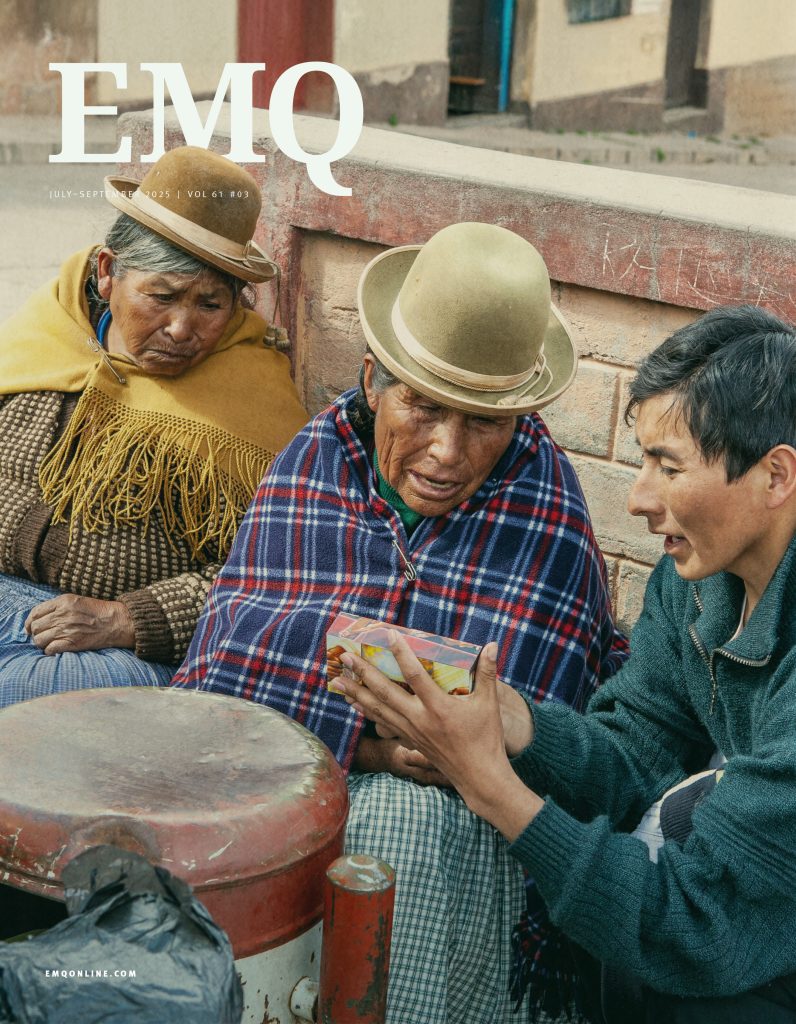
EMQ (Evangelical Missions Quarterly)
July – September 2025 | Volume 61 Issue 3
(If you encounter difficulty, contact EMQ-Subscriptions@missionexus.org)
Editorial

Evangelism
By Evelyn Hibbert | The gospel is more than words. It encompasses all the riches of Christ in us, the hope of glory (Colossians 1:27). Too often evangelism has neglected the importance of relationships, context, and Christ’s lordship. Communicating the gospel includes how we live, according to where we live. From a place of belonging in each context, Jesus welcomes people in. As we embrace the people and culture of the context we serve in, we are more able to give answers to the questions they are asking.
Letters to the Editor
The Function of Emotions and the Arts and Missions
By David R. Dunaetz | “Letters to the Editor” is a forum for readers to share further thoughts about previously published articles, agreeing, disagreeing, extending or taking the conversation in new directions. “Letters” can also raise new issues.
Evangelism

“Ask of Me”: Ways to Appeal to Felt Needs That Lead to Spiritual Depth
By Sally Folger Dye, T. Wayne Dye, and Edie Bakker | People in every country have many legitimate life concerns. God wants to help with these felt needs. Handled carefully, felt needs can be a door opener, an evangelism tool, and even an ongoing discipleship tool. Prayerfully looking for felt needs is an important way to spread the gospel in every culture of the world.

Curiosity and Communication
By Stan Nussbaum with Hussan | This article describes a Central Asian house church network‘s approach to evangelism, focusing on creating curiosity through surprising statements about Muslim practices, Christianity, and acts of kindness. This technique leads to friendly, challenging religious discussions, helping Muslims come to Christ. The movement emphasizes contextualization to overcome local objections and uses curiosity to engage people in studying the Bible and following Jesus.
Character Theology
By Tom Steffen | Tom Steffen discusses how to shift from traditional systematic theology to a story-based approach. He highlights the importance of biblical characters in teaching theology, emphasizing that characters drive the narrative and help convey theological truths through their experiences. This approach, known as character theology, engages readers by connecting biblical stories to human experiences, making theology more relatable and impactful.

The Centrifugal Gospel: Recovering the Outward Movement of God’s Mission
By Chris McMillan | The gospel is dynamic and outward-moving. This centrifugal nature of the gospel contrasts with the centripetal approach prevalent in the West. Chris McMillan urges a return to the biblical mandate of "Go and Tell." He calls for a revival of missionary vigor to counter institutionalization of the church.

Evangelism as Brokerage: A Biblical Study of 1 Corinthians 10:23–11:1 in a Chadian Context
By David Kimiti | This article explores how missionaries working in patronage societies, might be informed by 1 Corinthians 10:23–11:1 in taking on the role of a broker as a way of viewing their evangelism. The missionary broker avoids the potential compromises in the roles of patron and client and takes a temporary role as a relationship broker. Using patronage to understand honor, social currency, and brokerage David unpacks Paul’s writing, offering practical insights for missionaries in Chad and similar relational cultures.
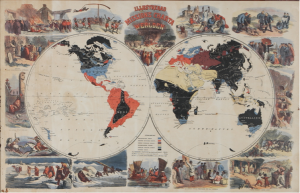
To the Ends of the Earth: How to Translate the Gospel Into Maps
By David Onnekink | Take any website of a missionary society and there is bound to be a map. Maps are visually attractive and picture comprehensively the geographical focus of mission. However, as Brad Gil wrote, essentially “All maps are wrong”.
Who Can Start a Movement? Three Possible Says of Being Involved in Starting Movements
By Emanuel Prinz | Movement catalysts possess distinct qualities in three areas: personality, spiritual, and social influence. They exhibit radical learning, innovation, drive to achieve, conscientiousness, assertiveness, and persistence. Spiritually, they have a hunger for God, deep prayer, listening to God, expectant faith, evangelistic zeal, transformational disciple-making, tangible love, and confidence in the Bible. Socially, they inspire others, influence beliefs, empower others, and have confidence in local disciples. People can get involved by starting a movement, joining a catalyst’s team, or serving an existing movement.

Called Again: Veteran Missionaries and the Unfinished Task
By David Smith | Claude Hickman of The Traveling Team is quoted as saying, "Reaching the world with the gospel is not a resource problem, it is a mobilization problem." In this article, I challenge my colleagues to consider leaving their established work in countries with gospel presence and moving to the least-reached countries and people groups of the world. This missionary mobilization is only possible through education, evaluation, and a growing conviction that we may be the ones best suited to the task.
New Models of Missions

Modality-Sodality: Let’s Call the Whole Thing Church
By Sara Salloum |In 2009, Ralph Winter introduced the terms modality to describe the local church fellowship and sodality to describe what we now call parachurch ministries. Winter explained why both are valid and necessary but offered no model nor description of how they should work together to fulfill God's global purpose. This article specifically challenges the church to work as one body and offers a model that centers on God's purpose.

Mission as Accompaniment: A Path to a Post-Colonial, Alternative Missionary Practice
By Frank Paul | Frank Paul discusses the transformation of Mennonite missionary practices from imposition to a more respectful, non-paternalistic approach. It highlights the importance of listening, empowering indigenous people, and fostering mutual respect. The shift towards intercultural dialogue and fraternal accompaniment has led to a more respectful and effective missionary presence in the Argentine Chaco.
Principles for Practice

A Missiological Reflection on the Fall of Saigon
By Truong Tran | This article explores the unintended consequences of missionary-led evacuations of Vietnamese pastors on April 30, 1975. It argues that these actions weakened local churches and highlights the missiological imperative to build churches with lasting hope in Christ and indigenous leadership.
Missionary Well-being

What Missionaries Want You to Know
By Amy Young, Stacey Covell, and Christine Rollings | This article reports on the results of a survey of fieldworkers. The research revealed a gap of communication between goers and senders. This can be exacerbated when missionaries feel that they have to be superhuman. Many challenges that missionaries face are normal human experiences although these can be compounded by cross-cultural life and ministry stresses. Practical recommendations for senders are provided.