


EMQ » Jul – Sept 2026 » Volume 62 Issue 3
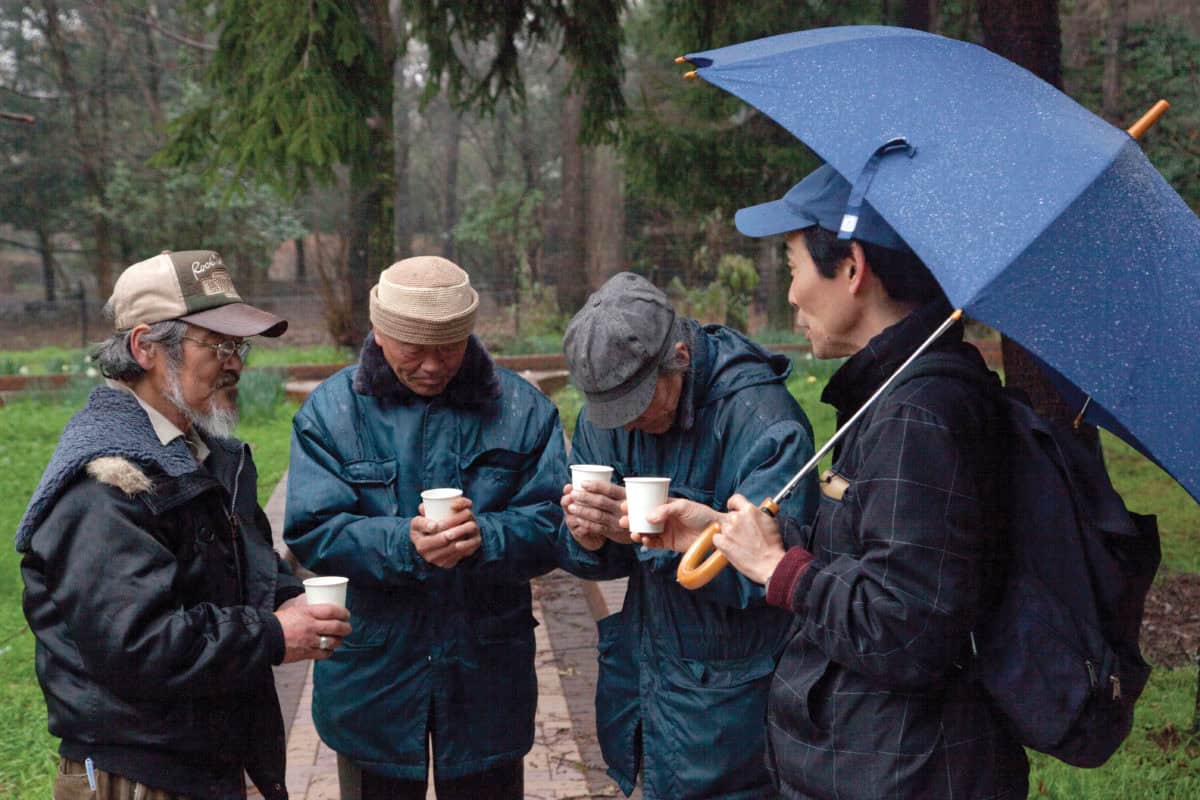
Summary: What if the church’s greatest obstacle to mission is church life itself? This article introduces “Church-Gravity Syndrome,” the tendency of Christian communities to pull believers away from the very people they hope to reach. Drawing on Jesus’ ministry and movements in Thailand, it shows how discipleship flourishes when believers minister among the lost. Practical steps for cultivating an incarnational presence among the lost are discussed.
By Manuel Becker
The Church-Gravity Syndrome
I grew up deeply immersed in church life. People often joked that I practically lived at the church. For a period, I attended three different youth groups and led two children’s ministries during the week. In practice, I was involved in church activities six days out of seven.
At one point, however, I sensed that God was calling me to serve at a local youth center run by the municipality. My obedience lasted only one week. The environment felt entirely unfamiliar. The language, the culture, and the people were different from anything I had experienced within church circles. I felt uncomfortable and out of place. Rather than learning to remain present, I retreated to the church world where I felt at home. In hindsight, my reaction resembled Jonah’s reluctance to go where God had sent him. I chose the familiarity of my Christian bubble over engagement with people outside it.
When my family and I later moved to the mission field, I did not want to repeat this mistake. We were determined not to become confined to a Christian social bubble. For that reason, during our first four years in Thailand, we intentionally chose not to attend a church. Instead, we invested our time primarily in relationships with Thai Buddhists rather than with other missionaries or Thai Christians. During those years, I learned to explain the gospel without relying on Christian vocabulary. Some of our Buddhist friends eventually became followers of Jesus. When asked what had influenced them most, they often pointed to the life they observed in our family and said, “I have seen Jesus in your family.” Sharing everyday life allowed them to see the transforming influence of Christ in a close and tangible way, particularly in how faith shaped our family relationships.
After about five years, however, we sensed that God was calling us to join a Thai church. I genuinely love that Thai church and its people. Yet, over time, what I had feared happened. Our patterns of time investment began to shift. Gradually, more of our energy went into church activities and relationships with Christians, while less time was spent with our Buddhist friends. As I reflected on this change, I realized that I was experiencing what I began to call Church-Gravity Syndrome (CGS). Like gravity, many churches have a natural pull that draws believers inward toward Christian relationships and activities.
I remember one particular moment when it became clear that CGS is a widespread pattern among many Christians. For several months, I had been trying to introduce a missionary friend of mine to a Thai Christian woman whom I thought might be a good match for him. When I later asked him why the relationship had not developed, he replied, “She has no time. She is always busy with church activities. I think she is already engaged to the church.” His comment highlights a common issue among many Christians. Church life slowly fills our schedules until little time remains for anything outside of church activities.
In this article, I argue that the tendency of Christians to cluster within church-centered social worlds often produces what might be called an incarnation deficit. When believers spend most of their time within Christian spaces, their presence among those who do not yet know Christ gradually diminishes. This pattern is not only difficult to reconcile with the incarnational pattern of Jesus’ ministry, but it can also undermine the church’s mission.
The Incarnational Ministry of Jesus
I consider Jesus’ ministry as mission work. Jesus himself can be understood as the ultimate missionary. He left the heavenly kingdom and entered our broken world. The incarnation was the most radical act of cross-cultural ministry imaginable. The eternal Son of God did not remain distant but took on human flesh and fully entered the cultural, social, and political realities of first-century Jewish life under Roman rule.
Jesus was sent by the Father with a clear mission. Yet before beginning his public ministry, he spent about thirty years living an ordinary life. Remarkably, the gospels tell us very little about this long period. Most likely, Jesus lived much like the people around him. He probably worked as a carpenter, lived within his community, and participated in the rhythms of everyday life. During these years he grew in wisdom (Luke 2:52), learned the Scriptures, and experienced firsthand the struggles and hopes of the people he came to save.
When Jesus began his ministry, he did not establish a religious center that people had to attend. Instead, he invested deeply in people. For about three years he shared life closely with twelve disciples. This proximity allowed the disciples to observe Jesus continuously and gain an intimate view of his character and mission. They watched how he interacted with people and how he responded to real-life situations. Everyday events became teaching moments. When he saw people giving offerings (Mark 12:41–44), heard about tragic events (Luke 13:1–5), or observed behavior at a banquet (Luke 14:7–14), he used these moments to teach. Discipleship was therefore not limited to formal instruction but woven into daily life.
Although Jesus occasionally taught in synagogues and visited the temple, most of his ministry took place outside religious buildings. He visited homes, traveled through villages, taught in public spaces, shared meals, and attended celebrations. He spent so much time with tax collectors and sinners that religious leaders accused him of compromising his holiness (Luke 7:34). Apparently, the tendency to withdraw into religious circles already existed in Jesus’ day.
Jesus consistently met people where they were. At times he even instructed those who wished to follow him to remain within their communities and bear witness there (Mark 5:19). His ministry unfolded among the lost. As John summarizes, “The Word became flesh and dwelt among us” (John 1:14). Jesus entered human reality and engaged it from within.
After his resurrection, Jesus commissioned his followers to continue this pattern. They were to make disciples of all nations by going out among them (Matt 28:19). The early church followed this outward movement. Paul taught in homes, reasoned in synagogues, and engaged people in public spaces such as marketplaces. In Athens he even entered the intellectual and religious conversations of the city (Acts 17). Like Jesus, he carried the message of the kingdom into the everyday spaces where people lived, worked, and worshiped, ministering among them rather than expecting them to enter a Christian environment.
CGS vs. Among Ministry
Today, relatively few Christians immerse themselves deeply in the social worlds of those who do not yet know Christ. To better understand this dynamic, it is helpful to examine how CGS typically unfolds. CGS typically unfolds in three stages: a gravitational pull toward Christian community, the gradual collapse of relationships outside the church, and finally the formation of a closed Christian ecosystem.
The Force: Church Gravity
The process usually begins with good intentions. New Christians long for fellowship, worship, and spiritual growth. They are drawn to their new spiritual family. As a result, believers naturally enjoy spending time together. Within the church community, shared beliefs reduce many of the tensions that arise in other social environments. By contrast, believers who remain in their original social networks often face challenging questions. What practices can they continue to participate in? Where must they draw boundaries? How should they respond to cultural expectations that carry religious meaning? Making wise decisions in such situations requires discernment, courage, and a willingness to wrestle with complexity. These decisions are rarely simple, especially in societies where religion and culture are closely intertwined, as is the case among many of the world’s least reached peoples.
By contrast, within the church community these tensions largely disappear. Because most people share the same convictions, believers are seldom forced to wrestle with such difficult questions. As a result, remaining primarily within Christian spaces often feels much more comfortable than navigating the challenging realities of following Christ within non-Christian social environments.
The Collapse: Relationships Outside the Church
Over time, however, this gravitational pull begins to reshape believers’ social worlds. As church involvement increases, relationships within the Christian community often deepen while relationships outside it gradually weaken. At the same time, many Christians have been taught to view the world as a place of danger. Believers are warned about moral compromise or syncretism. While such concerns are not without merit, they can unintentionally encourage withdrawal from broader society. The church becomes a place of safety, while the outside world is increasingly perceived as dangerous. As a result, connections with friends, neighbors, and colleagues who do not share the Christian faith slowly become strained or fade altogether.
The Result: A Closed Christian Ecosystem
The result is a Christian social bubble in which believers spend most of their time with other Christians and participate mainly in church activities. Meanwhile, their former friends outside the church begin to feel abandoned or even suspicious. In some cultural contexts, they may perceive that the new believer has been taken away from the community or brainwashed by Christians. One Thai scholar summarizes this common pattern as follows:
The relational bonds between new converts and their natural social networks are
broken; as a result, the new converts lose their identity as Thais and become weak
Christians; the parents and relatives thus turn against the church and become strong
enemies of Christian conversion.[i]
This outcome often resembles extraction evangelism, even when no one intentionally pursued such a strategy. The new believer is gradually pulled out of his or her original social network and integrated into a Christian one, leaving few natural bridges through which the gospel might flow back into that community.
The Cure: Recovering Incarnational Presence
Rather than extracting new believers, we must disciple them in their world. In doing so, we recover the incarnational pattern of Jesus’ ministry.
Following this model requires believers to cultivate intentional presence among those who do not yet know Christ. Instead of primarily inviting people into church programs, Christians must learn to live among the unreached and disciple them in their context. Today, relatively few Christians immerse themselves deeply in the social worlds of those who do not yet know Christ. For many churches, evangelism and discipleship primarily consist of inviting people to attend Christian activities and gradually become part of the church community. This pattern differs significantly from the approach modeled by Jesus. His ministry was primarily an among ministry—a life lived among the people he came to save.
Such an approach is not easy. In a CGS model of ministry, the burden largely rests on the seeker to enter the Christian world. In an incarnational model, however, the responsibility shifts to the believer to enter the world of others. This requires patience, cultural sensitivity, and a willingness to live faithfully in environments where Christian assumptions are not shared. Yet it is precisely this kind of presence that characterized the ministry of Jesus. The table contrasts CGS ministry with incarnational, among ministry.
| CGS ministry | Among ministry |
| Most common modern church method of ministry | Jesus’ model of ministry |
| Puts a heavy burden on the non-believer | Puts the burden on Christians |
| The non-believer needs to enter the Christian community to be discipled. | Christians stay in or move into the lost community. |
| Non-believers need to leave their comfort zone, go to an unfamiliar place, join a new social group, and learn how to behave in this group. | New believers stay in their own context. They get to know Jesus in their context, learn how to live with him there, and thereby transform it. |
| Christians stay in the church world where they are comfortable. Christians can invite the lost to church events without needing to enter their world. Christians do not need to make any sacrifices. | Christians leave the comfort zone of the church world. They need to learn to live among the lost and find ways to bring Christ into their specific contexts so that Christ can transform those contexts. |
| Discipleship is done in the sterile context of church activities, often resulting in irrelevant content. | Discipleship is done amid real life and daily struggles. The content is highly relevant to everyday life. |
| Relationships are often shallow and focused on the conversion of non-believers through saying the right words. | Relationships are organic and authentic. |
| Depends on church activities. | Does not require church activities. |
| Happens from a distance. | Happens in the context of deep relationships and the messiness of daily life. |
Two Case Studies
After 200 years of mission work in Thailand, Christians remain a tiny minority. Yet two recent movements show promising signs of growth. Both of them embody among ministry.
The first example is a movement among Thai Buddhists.[ii]In this movement, believers have intentionally remained within their families and social communities rather than separating themselves into a distinct Christian subculture.
This movement began in northern Thailand through the witness of a missionary family who intentionally immersed themselves in Thai society. Instead of creating new church structures, they focused on building authentic relationships with Thai Buddhists. A turning point came during a period of severe hardship when the missionary’s wife was battling cancer. During this time, many Thai Buddhist friends gathered around the family to offer practical help and emotional support. In the midst of suffering, these friends witnessed the wife’s hope, joy, and faith in Jesus. Observing how her faith sustained her through intense hardship deeply impacted them. Several of these Thai friends eventually became followers of Jesus, not through evangelistic activities but through close relational proximity and shared lives.
A defining characteristic of this movement is that believers are encouraged to remain within their existing family and social networks. Instead of leaving their community to join a church-centered social world, they continue participating in normal family gatherings, friendships, and business relationships. This allows the gospel to spread through relational networks. Indeed, most evangelism occurs during ordinary conversations when people ask believers for advice about life challenges or family problems. In response, believers share biblical wisdom and explain how Jesus has transformed their lives and families.
No traditional church services exist in the movement. Instead of creating new forms of gathering, discipleship typically occurs during existing social interactions such as family meals, business meetings, or informal visits among friends. In these settings believers discuss how Jesus would address particular life situations, encourage one another to follow him more faithfully, and share their faith with others.
A second example is the Association of Free Churches in Thailand (AFT) movement.[iii] When the Thai king passed away, the country entered a period of national mourning. During that time churches were not allowed to host large public celebrations such as Christmas events. As a result, one Thai church decided to go to the people and visit them in their homes instead of inviting them to church. This simple change produced a profound shift. Discipleship moved from church buildings into the homes of new believers, where family members and neighbors were present. Over the past ten years, they have planted more than 8,000 house churches and baptized more than 30,000 Thais.
Both examples highlight an important insight. When disciples remain embedded within their existing social networks, the gospel can spread naturally through those networks. Rather than extracting individuals from their communities, the message of Jesus begins to flow through families, friendships, and everyday life.
Practical Implications
Five practical steps can help believers cultivate a genuine presence among those who do not yet know Christ. First, believers can become part of a community they genuinely enjoy. Since meaningful relationships require time, it is wise to engage in environments that naturally interest them. Those who enjoy sports, can join a sports team; lovers of motorbikes, can become part of a biker group. When we engage in a community that matches our interests, long-term presence becomes more natural and sustainable.
Second, we should think carefully about how to present our identity when entering a new community. People will want to know who we are. In some contexts, introducing ourselves immediately as missionaries may burn bridges and create unnecessary tensions because the term can carry significant negative meaning from the past.
Third, every community has expectations. Membership usually involves responsibilities, time commitments, and participation in shared activities. To gain trust, it is important to be a good member of the community. We do this by being generous, offering help, and contributing our time. In this way, we become a blessing to the community.
Fourth, disciples must be equipped to remain faithful to Jesus within their existing social networks. Much Christian teaching unintentionally encourages believers to withdraw from environments where non-Christian cultural or religious practices are present. Instead, disciples need guidance on how to follow Jesus within these contexts. This includes learning to distinguish between cultural forms and meaning, and discovering how cultural forms can be reinterpreted with Christ-centered meaning. For example, some cultural holidays can be given a new meaning rooted in the gospel, thus enabling Christians to participate, sharing this new meaning with their family, friends and neighbors.
Finally, trust within a community develops slowly. Meaningful relationships rarely emerge quickly. Patience and consistency are therefore essential. Simply showing up regularly—attending gatherings, participating in activities, and sharing life—can itself be a powerful form of ministry. Over time, as trust grows, opportunities to speak into people’s lives and share the message of Jesus often arise naturally.
Jesus called his followers the salt of the earth. Yet salt that remains in the shaker changes nothing. The future of mission may depend less on better church programs and more on believers who are willing to truly serve among the lost.
AI declaration
AI tools were used to refine the English as the author’s first language is not English. AI was not used to generate content.
[i] Ubolwan Mejudhon, “The ritual of reconciliation of Thai culture,” in Family and faith in Asia: The missional impact of social networks, ed. Paul De Neui (William Carey Library, 2010), 130.
[ii] For the full case study, see Manuel Becker, “A case study of an insider movement among Buddhists in Thailand,” Missiology 51, no. 3 (2023): 210–222, https://doi.org/10.1177/00918296231176771
[iii] To learn more about this movement, visit their official website: https://aft-thailand.org/

Manuel Becker has served as a church planter in Thailand for more than a decade. He serves as the editor of the SEANET book series. He has been a member of the executive board of the International Journal of Frontier Missiology. He holds an MA from Columbia International University Korntal (Germany) and is the author of The Great Victor. Becker has published over forty theological articles and hosts a Thai theological podcast.
EMQ, Volume 62, Issue 3. Copyright © 2026 by Missio Nexus. All rights reserved. Not to be reproduced or copied in any form without written permission from Missio Nexus. Email: [email protected].


Responses